Semiconduttori ed elettronica


Industria 4.0 per la produzione elettronica automatizzata


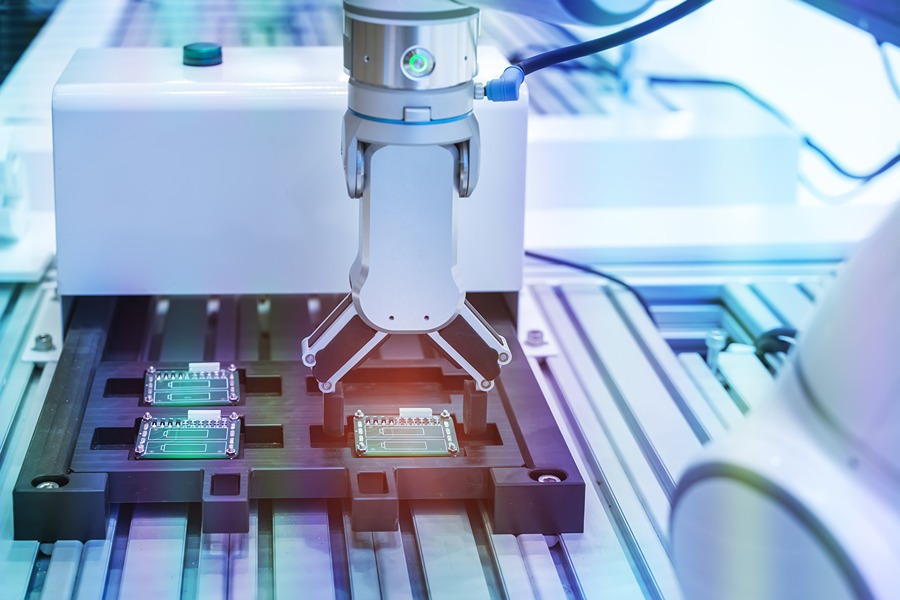
Nel processo di produzione di semiconduttori ed elettronica, occorre eseguire un'ampia varietà di fasi di lavoro in modo affidabile, dinamico, preciso e con la massima efficienza possibile.

Alimentazione, posizionamento, assemblaggio e stoccaggio. Dalla regolazione dei formati al processo di saldatura: grazie agli azionamenti compatti, resistenti e intelligenti Dunkermotoren, è possibile mappare tutti i processi di regolazione rotativi e lineari lungo l'intero processo produttivo.


Semiconductors

Perché offriamo la soluzione di azionamento perfetta

Motori potenti e compatti
Sistema modulare per tutte le applicazioni
Lunga vita utile
Integrazione di varie interfacce, da PROFINET a EtherCAT ed Ethernet/IP
Entra nell'Industria 4.0 con nexofox
Per il nostro ambiente. Tecnologia dei motori ad alta efficienza energetica

Miglioriamo assieme

  • Offriamo azionamenti per ogni applicazione
  • » Ottimizzazione dei costi
    » Compatibilità con i sistemi bus desiderati
    » Aumento dell'efficienza grazie ai motori intelligenti
  • Con nexofox percorriamo nuove strade: da puro fornitore di prodotti a operatore di servizi completi
  • » Supporto per l'implementazione di manutenzione predittiva, monitoraggio delle condizioni e                 controllo remoto
    » Utilizzo di standard aperti "Open Industry 4. 0 Alliance" e "Asset Administration Shell" Offriamo           supporto nell'automazione
  • Con le nostre soluzioni robotiche EGS Automation
  • » E la semplificazione di varie fasi di produzione

    Realizza la tua fabbrica intelligente con noi
circuit board

I nostri componenti di azionamento in uso

  • Assemblaggio SMT (stampa PCB)
    L'allineamento di precisione dei circuiti stampati e l'applicazione delle tracce richiedono azionamenti intelligenti e di alta qualità.
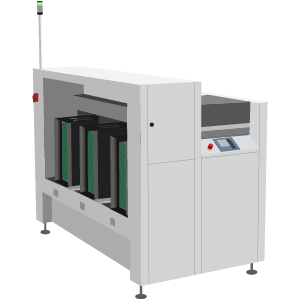
  • Assemblaggio di circuiti stampati (assemblaggio/posizionamento di PCB)
    Alimentazione di componenti SMD e trasporto di PCB per un'ampia gamma di formati
  • Sistemi di movimentazione per circuiti stampati (sistemi di movimentazione di PCB)
    I nostri azionamenti coprono un'ampia varietà di applicazioni nell'ambito della produzione elettronica. Ciò comprende allineamento, rotazione, sollevamento e distribuzione all'interno dei processi.
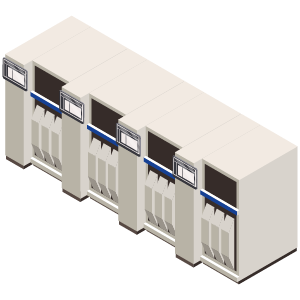
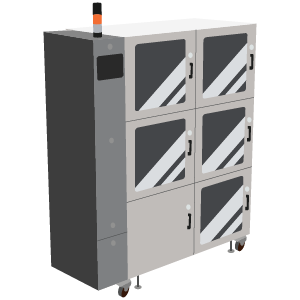
  • Sistemi di stoccaggio per circuiti stampati (sistemi di stoccaggio per PCB)
    Per lo stoccaggio sicuro di dispositivi elettronici sensibili, è necessario un apposito sistema sofisticato. Gli azionamenti Dunkermotoren caricano e scaricano i sistemi di stoccaggio con la massima attenzione e a una velocità estrema.
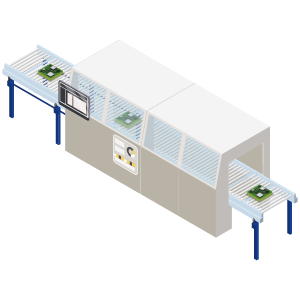
  • Sistemi di brasatura e saldatura (sistemi di saldatura)
    Negli ambienti estremi, i nostri azionamenti resistono al carico continuo di operazioni su 3 turni e garantiscono la massima disponibilità dei sistemi per anni. Gli azionamenti vengono utilizzati per la movimentazione delle saldature, il posizionamento e il trasporto dell'elettronica.

Prodotti in evidenza:

Scaricamenti

Comunicati stampa

04/24/2024
nexofox – Solutions for Smart Access Gates
With MotionCode, nexoLink, and Smart Diagnostics, Dunkermotoren's digital brand nexofox offers solutions for implementing smart access control devices. MotionCode is a central, decentralized component designed from the ground up. Each motor installed in an access control device (referred to as an "access gate") can be programmed with its own individual MotionCode, enabling features like hit detection without any additional hardware. The drive solution utilizes motor currents to evaluate whether a gate is currently blocked. Another benefit of MotionCode is the option to replace mechanical functions with software. For the protection of the mechanics, brakes with lower braking torque or slipping clutches are sometimes provided, so that in the case of excessive force on a closed gate, damage can be avoided. The smart Dunkermotoren in conjunction with MotionCode simulate the function of a slipping clutch. This allows the protection of the mechanics in the absence of hardware components without compromising safety. NexoLink is the second central component for smart access gates. It easily integrates into any IIoT ecosystem, allowing for monitoring and analysis of all relevant motor data. If no monitoring solution is currently in place, individual dashboards and alarms can be configured thanks to Smart Diagnostics. Motors send alarms themselves when technician attention is required, enabling more efficient maintenance planning.
04/05/2024
La nuova generazione di motori intelligenti
SPS Italia a Parma rappresenta un punto di riferimento per l'industria italiana intelligente, digitale e sostenibile. Dal 28 al 30 maggio 2024, Dunkermotoren e MAE, entrambi brand di AMETEK, saranno presenti nel padiglione 5, stand L005, quali partner consolidati dell'industria italiana, riconosciuti per la loro rinomata qualità e adattabilità. Tra le sue offerte, Dunkermotoren presenterà il riduttore epicicloidale PLG 75 ServoLine, che vanta una durata di vita superiore a 20.000 ore, ideale per i motori in corrente continua a lunga durata. Questo nuovo accoppiamento di motore e riduttore è ideale in applicazioni con cicli di funzionamento gravosi, distinguendosi per affidabilità, elevata coppia e notevole efficienza. Anche nexofox, il marchio IIoT di Dunkermotoren, sarà al centro della scena, presentando la sua ultima innovazione. Gettate le basi della vostra smart factory con NexoLink, un modulo innovativo che facilita la perfetta integrazione di tutti i motori intelligenti di Dunkermotoren. I moduli di NexoLink, come Smart Diagnostics e Predictive Maintenance, consentono il monitoraggio in assenza di sensori dell'usura del riduttore, diventando l’indicatore fondamentale della durata complessiva della soluzione. nexofox sta progredendo rapidamente anche nel settore dell'hardware. La novità per la famiglia di controller, che si affianca al già esistente controller esterno BGE 5510 dPro, è rappresentata dal nuovo BGE 8060 dPro. In SPS Italia, Dunkermotoren intende mettere in evidenza la sua serie di motori BLDC intelligenti dPro, con potenze da 20 a 5000 W, e con interfacce bus ed Ethernet come CANopen, PROFINET, EtherCAT ed Ethernet/IP. Un esempio interessante è la Demo Unit PROFINET, che dimostrerà il funzionamento sincrono di quattro assi azionati da motori BG dPro PN. A partire dalla metà del 2023, la gamma di prodotti Dunkermotoren comprende anche la motoruota NG 1000 WO, che offre ulteriori possibilità di sviluppo per i sistemi a guida autonoma (AGV e AMR). Abbinata al BG 95 dPro, questa soluzione ha un'altezza di soli 95 mm e, grazie all'offset assale, consente di realizzare veicoli con una larghezza di soli 600 mm e un potenziale peso totale di quattro tonnellate. Versioni a gioco ridotto consentono un posizionamento estremamente preciso del veicolo. Inoltre, la disponibilità di riduttori a bassa rumorosità estende l’applicabilità di queste apparecchiature a guida autonoma, rispondendo ai requisiti del settore medicale, e prestandosi ad applicazioni come le macchine mobili per la risonanza magnetica o le radiografie. Le soluzioni di Dunkermotoren sono particolarmente adatte anche per veicoli multidirezionali. Una soluzione compatta ed interessante sviluppata dal nostro partner TEKNO M.P., ideale per la rotazione continua a 360°, sarà esposta allo stand. La consociata di Dunkermotoren, MAE, si concentra su un altro trend fondamentale: l'approvvigionamento locale. MAE abbraccia pienamente questa tendenza, producendo i suoi prodotti esclusivamente in Europa. Grazie alla possibilità di aggiungere freni, encoder, riduttori ed elettronica, il portfolio di motori passo-passo di MAE offre un'integrazione flessibile in diverse applicazioni. L'elettronica sGo, recentemente sviluppata, offre una soluzione di controllo a costi ottimizzati per le taglie Nema 17 e Nema 23. Downloads: La nuova generazione di motori intelligenti (PDF)
03/27/2024
Digital twins? Administration shell? These concepts are crucial – today!
Dunkermotoren, an AMETEK brand specializing in integrated BLDC motors, is spearheading innovative IIoT solutions under the nexofox label. These solutions offer customers unprecedented opportunities to analyze and integrate drive data. One of the primary focuses of Dunkermotoren's efforts is the development of comprehensive digital processes in collaboration with its customers. At the heart of these endeavors lies the creation of digital twins, leveraging the concept of the Asset Administration Shell (AAS). The significance and potential of this approach might not be immediately apparent, but numerous use cases shed light on its promising nature. In the realm of product and factory digitalization, the digital twin is emerging as a central component. Dunkermotoren has collaborated with other renowned component manufacturers through the Open Industry 4.0 Alliance (OI4) to explore this concept. Particularly for components, the relevance of digital twins is already evident, with existing use cases demonstrating the need to supply product documentation and information digitally and in standardized formats - a task that could be significantly facilitated by standardized digital twins. Looking ahead, numerous factors further highlight the importance of this technological approach. It's foreseeable that the EU will impose increasingly stringent regulatory and documentation requirements on delivered products. Examples include the Digital Product Passport (DPP) under the Ecodesign for Sustainable Product Regulation (ESPR) and the CO2 footprint outlined in the Corporate Sustainability Reporting Directive (CSRP). Additionally, IT security demands, such as those outlined in the Cyber Resilience Act, are essential, particularly concerning software patching for products. What unites these regulations is the constant expansion of product information required from customers, end-users, and other stakeholders in the value chain. Meeting these demands necessitates standardized aggregation of product-related data alongside uniform data provision - a task ideally suited for the digital twin framework. Looking a bit further ahead, there are even more exciting possibilities emerging in how digital services can truly add value. This is an area where component manufacturers are dedicating significant effort, but one that has often faced the challenge of data sovereignty. Here's the issue: Machine manufacturers use components from various component manufacturers to build their machines. These machines are then operated by the customers of the machine manufacturers. The crucial data, which can provide insights into the product status, is generated only when the machine operates in the factory. However, the sovereignty over this data doesn't lie with either the component manufacturer or the machine manufacturer; it rests with the plant operator where the data is generated. While pilot and flagship projects can sometimes address this problem through intricate individual contracts, this approach typically becomes an insurmountable obstacle for mass production. From the perspective of component manufacturers, the digital twin could offer a key solution. If a digital twin were provided alongside the physical product and integrated by the machine manufacturer, it could then be transferred to the machine operator and incorporated into their IT environment. Consequently, the data generated from operating the installed component would also enhance the digital twin sourced from there. If analyses, such as identifying mechanical wear, require engine data, the system operator could voluntarily share this data with the machine and component manufacturers through the synchronization of digital twins along the value chain. The component manufacturer utilizes appropriate algorithms to determine the data records communicated through the chain of digital twins, then sends the results to the machine manufacturer, who in turn shares it with the machine operator. This enables the machine manufacturer to integrate a digital service for detecting component wear into its predictive maintenance solution and offer it to customers. This approach fosters transparent, voluntary business transactions. Another possibility for the component manufacturer is to purchase the data from the machine operator, who may also need to acquire the analysis if required. Standardized digital twins and data room networking would facilitate the implementation of digital value-added services throughout the value chain. While a few pieces of the puzzle remain before this scenario can be fully realized, there is a clear trend in this direction, prompting Dunkermotoren to devote significant efforts to developing the necessary technologies already today. The Technology Explained Briefly As highlighted in the aforementioned cases, a standardized digital twin plays a crucial role in implementing digital value-added services. But what exactly does such a twin entail? Dunkermotoren identifies the administration shell (AAS) as a fundamental technology in this regard. Its standard is already acknowledged across various industries and initiatives like Catena-X, Factory-X, the VDMA, the Industrial Digital Twin Association (IDTA), and the Open Industry 4.0 Alliance. This standard is increasingly discussed and adopted on a broader scale. Like the evolution of the Internet, the appeal here lies in a decentralized approach. This enables the exchange of data across different environments through a common standard. Drawing parallels to the Internet, various product catalogs can be likened to browsers, corporate IT to homepages, and the AAS to the IP protocol. Cross-company digitalization and the industrial data economy can only thrive if a heterogeneous system is established, allowing everyone to exchange and transact data under clearly defined rules. Dunkermotoren and the IIoT Guided by this vision, Dunkermotoren has taken on the challenge of administration shells and digital twins. In the current iteration, associated documents and technical data can be accessed by scanning a 2D code on the motor. Dunkermotoren is gradually implementing this feature across its entire portfolio. However, from a functional perspective, this marks just the beginning. Expanding upon this, Dunkermotoren is also working on providing CO2 footprints, exchanging time series data, and directly integrating digital twins into customers' ERP or PLM systems. These initiatives are being pursued collaboratively with other companies within the Open Industry 4.0 Alliance. Hands-on - testing the technology live As already mentioned, in addition to all the technology, collaboration and exchange with other companies is also an essential topic in the development of interoperable solutions. This is where the IDTA and OI4 provide an ideal environment for Dunkermotoren. The IDTA is responsible for the basic standardization and definition of the administration shell, which is particularly essential for functioning interoperability. The OI4 provides tangible use cases and best practices for successful implementation across various industries. If you would like to look into the future, you can already test the whole construct live! As part of Hanover Fair 2024, the Open Industry Alliance is once again organizing a Digital Twin Challenge. This will impressively demonstrate how open and interoperable the digital twin approach is and how easy it is to get started. In the form of a "rally", digital twins of real products can be scanned or collected at various trade fair stands. Join the challenge and see how digital, cross-company collaboration will be key to future competitiveness.   Downloads: Digital twins? Administration shell? These concepts are crucial – today! (PDF)

03/27/2024
Predictive Maintenance à la nexofox
The malfunction of machines and systems always poses a significant cost burden for companies. Costs of 120,000 euros or more per hour are not seldom for such downtimes.1  Profitability relies heavily on smooth operations and production. Unplanned downtimes exacerbate the situation, making it challenging to predict timing, duration, and associated costs.  To mitigate these risks, implementing optimized maintenance planning is advisable. Predicting specific error patterns is a crucial step toward condition-based maintenance, enhancing predictive maintenance strategies. The team at Dunkermotoren's digital brand, nexofox, specializes in preparing the manufacturer's drive systems for such maintenance approaches.  Adhering to the philosophy of "More than Motors," nexofox progressively expands the software product portfolio of Dunkermotoren, an AMETEK brand. A key component is the "Predictive Maintenance" software, offering customers a new option for automatic, condition-based monitoring of their entire drive systems. This software not only alerts customers to impending failures but also provides continuous updates on the system's current status. One distinct advantage of nexofox's "Predictive Maintenance" is its reliance solely on existing motor sensors, eliminating the need for additional electronic components. This approach not only saves space but also offers significant cost savings.  Predictive Maintenance in Detail In the initial stage of condition-based drive monitoring, the focus is intentionally placed on assessing the wear of the mechanics linked to the motor. This approach aims to optimize mechanical service life by detecting typical, gradual wear effects, such as those on an attached gearbox. Moreover, customers receive immediate alerts regarding abrupt changes that could potentially result in an unplanned downtime if not addressed promptly. Accurate detection of specific fault patterns necessitates collaboration with the customer, as they have the most detailed knowledge about their application's structure and can appropriately classify fault patterns. The initial version of nexofox's predictive maintenance solution offers customers a standardized basis as a tool for anomaly detection and unplanned downtime reduction, with room for individual adaptations. Like all nexofox software products, Predictive Maintenance is provided to customers as a Docker container, ensuring seamless integration into any existing industrial IoT solution without requiring a permanent internet connection. Predictive Maintenance operates locally on the EDGE gateway utilized by the customer. An internet connection is only necessary if the customer opts to share metadata with the nexofox team. However, consent is not obligatory for the software's full functionality. Nonetheless, the parameters processed by the software contribute to the ongoing optimization of the software´s algorithm. Subsequently, customers will have access to the latest algorithm version through regular updates. Downloads: Predictive Maintenance à la nexofox (PDF)