
Automatisation des entrepôts


Un guichet unique – tout ce dont vous avez besoin auprès d'un seul fournisseur

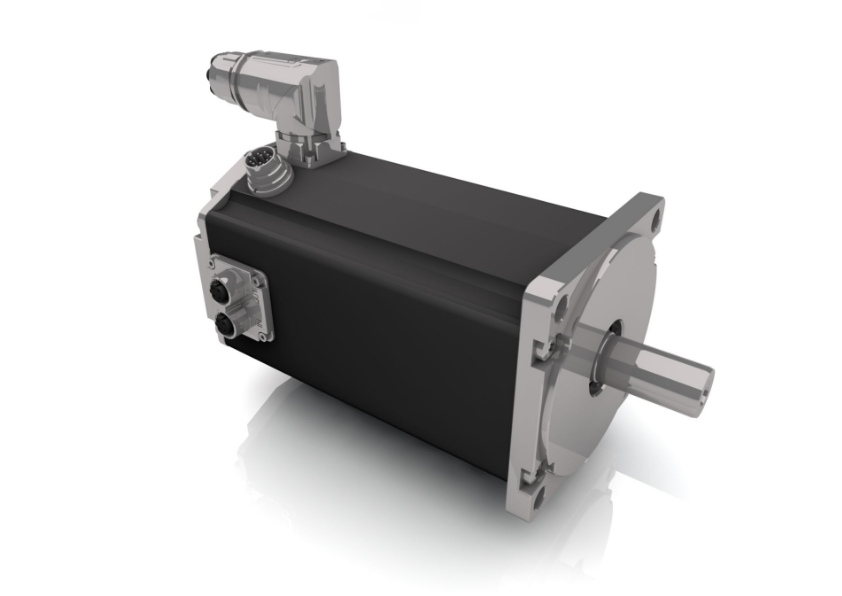
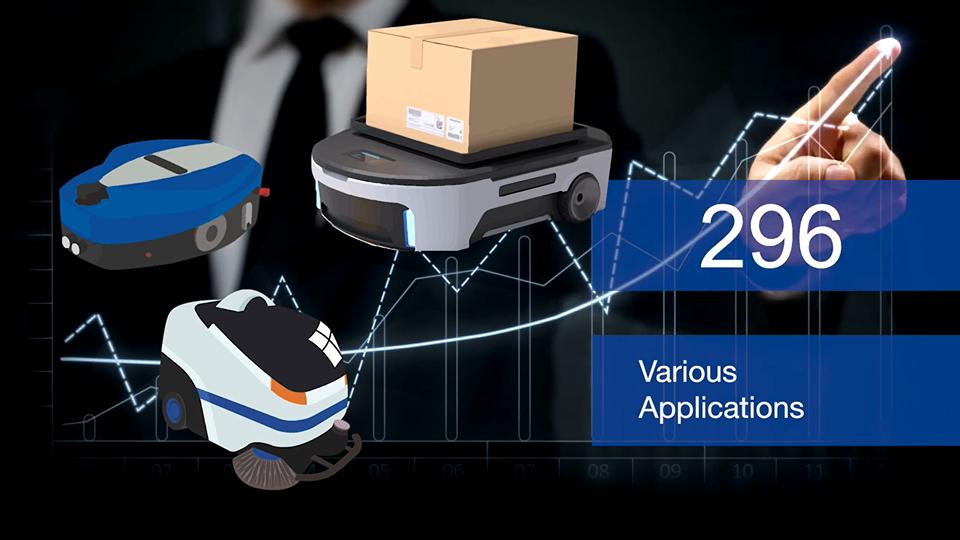
Les véhicules autonomes prennent de plus en plus d'importance dans l'intralogistique et aucune limite n'est en vue pour la conception de la technologie d'entraînement des solutions logistiques. Plus le produit est complexe, plus les composants sont complexes, y compris le moteur. Dunkermotoren propose une offre complète pour les AGV/AGC/AMR, composée d'un moteur, d'un codeur, d'un contrôleur et d'un réducteur sur moyeu. Selon les besoins du client, cette offre est disponible avec une solution de commande intégrée ou externe avec des interfaces de bus de terrain courantes telles que PROFINET, EtherCAT et Ethernet/IP ainsi que des fonctions de sécurité (STO). Grâce à leur conception efficace, les moteurs sont idéaux pour une utilisation dans des systèmes d'alimentation par batterie et leur conception robuste permet un fonctionnement dans des environnements difficiles. Les moteurs de Dunkermotoren offrent déjà une conception standard pour presque toutes les applications des technologies de manutention.

Pourquoi nous offrons la solution d'entraînement parfaite
Moteurs compacts et réducteurs sur moyeux pour un espace d'installation réduit
Systèmes d'entraînement intelligents, connectés et robustes
Solutions de sécurité telles que STO directement intégrées au moteur
Concepts CC innovants et économes en énergie (IE 5) pour les applications de batterie
Conçu pour une large gamme de températures
Longue durée de vie

Ensemble, c'est mieux


  • Interface modulaire sur le moteur
  • CANopen, PROFINET, EtherCAT, Ethernet/IP - commande via des E/S numériques grâce à la plateforme MotionControl
  • Conseil en applications
  • IIoT - avec nexofox
  • » Surveillance d'état et contrôle à distance pour votre application
    » Maintenance prédictive pour une disponibilité optimisée de votre production
    » Prise en charge de normes ouvertes telles que l'Open Industry 4.0 Alliance et MindSphere
  • Soutien de votre production avec les solutions d'automatisation d'EGS.
AGV

Nos composants d'entraînement en service

  • Systèmes de navettes
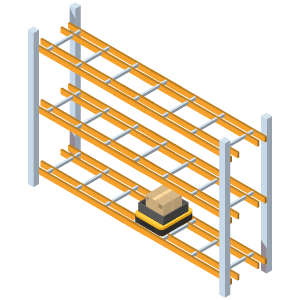
    Les systèmes de navettes pour palettes ou de petits conteneurs offrent un large éventail de possibilités pour les moteurs de Dunkermotoren. Qu'il s'agisse d'un entraînement par traction, d'un mécanisme de levage, de moteurs télescopiques, de moteurs à doigts ou d'entraînements par courroie, Dunkermotoren a la bonne solution moteur pour chaque application de votre entrepôt.
    SHUTTLESYSTEME
  • Tri de colis
    Lorsqu'il s'agit de diviser, dévier, réorienter ou trier des articles tels que des lettres, des colis ou des bagages, nos entraînements ont déjà fait leurs preuves depuis de nombreuses années.
    PAKETSORTIERUNG
  • AGV/AGC/AMR
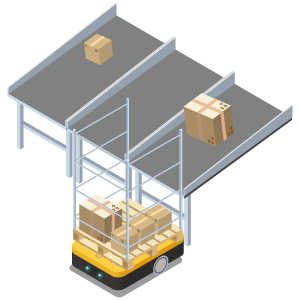
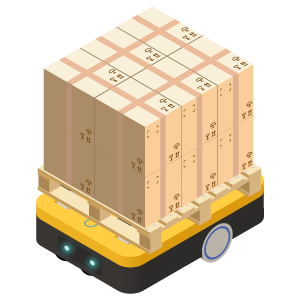
    Les véhicules à guidage automatique augmentent la productivité et améliorent l'efficacité dans les entrepôts. Les moteurs Dunkermotoren sont utilisés en combinaison avec un réducteur intégré comme entraînements de traction, conçus pour des charges radiales élevées, et comme moteurs de levage.
    AGCS
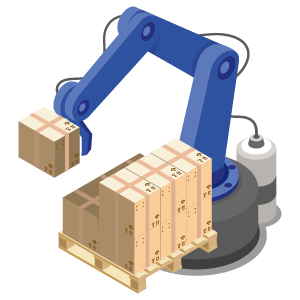
  • Robots de palettisation
    Les systèmes de palettisation robotisée d'EGS Automation permettent une palettisation rapide et flexible. Des temps de cycle plus courts sont obtenus grâce à des séquences de programmation optimisées. EGS Automation offre à l'utilisateur un fonctionnement et une manipulation intuitifs du système robotisé. Les outils de préhension universels et modulaires sont adaptés à une grande variété de pièces. Les robots EGS communiquent via une grande variété de systèmes de bus ou OPC UA. Grâce à la technologie des capteurs ou au traitement des images, les pièces sont identifiées.
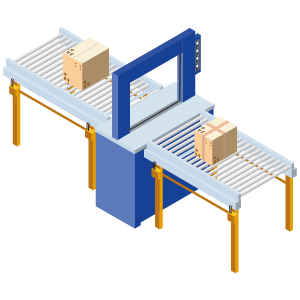
  • Cerclage
    Dans le domaine de la technologie de cerclage (à la fois autonome et intégrée à la ligne), Dunkermotoren propose des entraînements intelligents et contrôlables, du déroulement du feuillard au scellement, pour toutes les sous-étapes de ce processus d'emballage et de sécurisation des charges.
  • Bots
    L'importance des robots dans les entrepôts de petites pièces ne cesse de croître. Les systèmes de moteurs de Dunkermotoren peuvent être utilisés pour soulever les bacs de produits dans l'entrepôt ou même le robot lui-même.
Communiqués de presse

03/28/2023
Autonomous mobile robots from KNAPP - Warehouse flexibility thanks to strong drive solutions
The Open Shuttles, autonomous mobile robots (AMR), from KNAPP enable automation of internal transport without adjustments to the existing infrastructure. The Dunkermotoren drive solutions and gearboxes Framo Morat installed in the AMRs ensure the safe transport of even bulky and heavy loads. How long are you willing to wait for your ordered goods? According to a Statista publication from December 2021, most B2C customers from a total of twelve European countries included to the statistics expect their goods ordered online within three to five days. In the Netherlands, app. One third of the customers expect their goods to arrive after just one to two days.* But also in B2B commerce, speed, flexibility and transparency are getting increasingly important. To meet these requirements, logistics processes within an organization must be designed to be as efficient as possible. But what is efficient today may already be outdated tomorrow. Workflows must be adapted to the fast pace of demands and requirements - and the associated logistics processes must keep pace. A solution to these challenges is offered by the Austrian company KNAPP. Open Shuttles are autonomous mobile transport robots that take over internal transport tasks without adjustments to the existing infrastructure. Thanks to innovative fleet control software, tasks are efficiently distributed to the entire fleet of AMRs. * https://de.statista.com/statistik/daten/studie/652489/umfrage/annehmbare-lieferdauer-bei-online-bestellungen-in-europa/ - abgerufen am 22.11.2022 Travel drive The AMRs of the Open Shuttle series are the flexible alternative to classic tote conveyor technology and transport totes, cartons and trays up to 800 x 600 mm and a maximum payload of 100 kg. Thanks to automatic lifting and width adjustment, the Open Shuttles can accommodate trays of different heights and widths. They are used to connect different storage areas with each other and also supply decentralized workstations. In addition to plenty of intelligence provided by software and sensor technology, the travel drive is an important heart of the AMR. With its more than 70 years of experience in drive technology, Dunkermotoren, a brand of AMETEK, was able to provide the right solution. The autonomous mobile robot is driven by two brushless DC motors of the BG 75 series. The attached controller ensures smooth acceleration and deceleration of the robot. A brake from the Dunkermotoren modular system, which is also integrated into the overall drive, ensures an immediate stop of the AMR in case of an imminent collision with other vehicles or people, which are reliably detected thanks to the integrated laser scanner. The required power for the drive is provided by the hub gearbox from Framo Morat GmbH & Co. KG from Eisenbach, Germany. Together, the two companies - Dunkermotoren and Framo Morat - have already been able to realize many AGV/ AMR projects. Since 2021, they have been presenting a portfolio on the market specially designed for the strict safety and space requirements of AGV solutions. The complete system of motor and gearbox is maintenance-free over the entire service life. If the tread should unexpectedly become damaged or the requirements for the wheel change due to changed ground conditions, it can be replaced and serviced easily and directly on the vehicle. With an acceleration torque of up to 42 Nm, the hub gearbox ensures the Open Shuttle to move even heavy loads without any problems. The emergency stop torque of 63 Nm ensures an immediate stop in case of an imminent collision. Thanks to the complete drive solution from Dunkermotoren and Framo Morath, the Open Shuttle is always moving safely and reliably. The special feature of the drive solution is the extremely compact design of the overall drive. The gearbox is integrated into the wheel hub and thus disappears into the drive without increasing its length. Lift and steer drive The autonomous mobile robot (AMR), Open Shuttle Fork is the model of choice when it comes to transporting entire pallets, racks or large special load carriers and has a payload of up to 1,300 kg. The integrated automatic lift enables the load to be picked up directly from the ground and allows the load to be placed at heights of up to 1.2 meters. In the Open Shuttle Fork, drive solutions from Dunkermotoren are used for both, the lifting and steering movements, giving the AMR omnidirectional mobility. Thanks to integrated CANopen electronics, the shuttle's higher-level control system can easily address and control the drives. The lift of the up to 1,300 kg, is managed by the most powerful motor available in the Dunkermotoren product portfolio. A brushless DC motor of the BG 95 series with matching planetary gearbox handles even heavy loads without problems. The attached E 600 brake then holds the load in any desired position. If necessary, the brake is also used for an emergency stop at full lift. As soon as a certain safety level is reached, the engine is immediately switched off and the brake guarantees the stop. To always keep the right course, two additional Dunkermotoren drives are installed in the Open Shuttle Fork as a steering unit. The intelligent BLDC motors of the BG 66 series with planetary gearboxes are particularly compact and, thus, perfectly suited for use in flat vehicles. Again, the integrated electronics provide the required intelligence. Thanks to the CANopen interface, the motor receives commands from the higher-level controller of the AMR and can implement even minimal course adjustments of several millimeters. KNAPP's Open Shuttles can be integrated very easily into existing structures and during ongoing operation. To cover seasonal peaks, additional robots can be easily integrated into the fleet and removed again afterwards. Thanks to robust and maintenance-free drive solutions from Dunkermotoren and Framo Morat, the Open Shuttles are reliable, durable, and meet all requirements for small installation space and common interfaces. Are you also planning to implement a driverless transport application? Our sales team will be happy to advise you! Authors: Dunkermotoren: Stefanie Tröndle, Marketing Content Management & Stefan Tröndle, Produktmanager / Framo Morat GmbH & Co. KG: Felix Kneipp, Business Development / KNAPP: Anna-Carina Adam, Team Leader Marketing for Industry Solutions Downloads Professional Article (PDF)
06/09/2022
Soutien logistique de la Forêt-Noire
Dans le marché de consommateurs actuel, l’attente « commandé aujourd’hui - livré demain » prédomine. Grâce à la possibilité de commander facilement à travers le commerce en ligne, ceci n’est plus un voeu, mais la pratique courante. Une autre tendance évolue vers la personnalisation du produit de son choix. Grâce à la configuration et au système modulaire, cela est aussi possible aujourd’hui sans problèmes. Pour atteindre une telle flexibilité dans la production et la rapidité nécessaire dans la chaîne de livraison, des concepts logistiques sophistiqués pouvant prendre de multiples formes sont nécessaires. L’intralogistique en est un maillon. Il ne s’agit pas du transport d’usine à usine, mais du transport à l'intérieur d’un site de production, d’un entrepôt ou même d’un centre de distribution de paquets pour l’envoi direct au client. Généralement, les domaines d'activités suivants relèvent du paysage de processus de l’intralogistique : le transport de composants à l'intérieur d’une ligne de production flexible le rassemblement de produits d’un entrepôt pour l’envoi direct le transport pour le stockage et déstockage de composants d’une étagère en hauteur le triage et l’organisation de paquets pour la suite de transport ou la livraison Toutes ces fonctions étaient antérieurement excusées manuellement par des collaborateurs. Avec l'arrivée des codes à barres, des scanners laser et des capteurs LIDAR, des chariots de manutention automoteurs, des robots de service et des installations de tri à haute vitesse ont progressivement pris en charge des tâches. Les exigences posées aux différents moyens de transport sont plus ou moins comparables. Ils se déplacent de manierez autonome et indépendante du lieu, parfois même en navigation libre.  Cela suppose d’une part que le moyen de transport dispose d’une certaine « intelligence » et d’autre part que l’alimentation électrique soit effectuée au moyen de batteries. Lors du tri et de l’organisation de paquets il importe avant tout d'effectuer des mouvements rapides et précis afin de guider le flux de colis de manière fiable. L’interaction et la communication entre les unités de lecture, les commandes et les acteurs est essentielle ici. Ces exigences soulèvent certaines questions : quels entraînements peuvent être installés ? quels entraînements offrent une grande efficacité et donc une plus longue autonomie de la batterie ? quels entraînements offrent des fonctions sûres et lesquels sont compacts dans leur forme de construction ? Ces questions ont une réponse correcte : les entraînements de Bonnfort dans la Forêt-Noire - les entraînements de Dunkermotoren ! Dunkermotoren se distingue par des décennies d'expérience dans la technologie d'entraînements pouvant être alimentés par des accumulateurs. Le développement constant vers des entraînements efficaces sur le plan énergétique témoigne d'un niveau technique élevé. La construction compacte et la conception modulaire du système d’entraînement tout en un permettent une multitude de combinaisons avec une utilisation optimale de l’espace. L’utilisation de régulateurs de moteur hautement intégrés avec une grande flexibilité dans le choix des systèmes de bus de terrain est possible dans pratiquement tous les environnements industriels. Des fonctions supplémentaires liées à la sécurité, telles que frein, systèmes détecteurs indépendants ou sécurité fonctionnelle (fonction STO), complètent la gamme de services, en particulier pour des systèmes autonomes. Le mot-clé IIoT ou Industrie 4.0 peut aussi être utilisé comme extension supplémentaire, à laquelle Dunkermotoren peut répondre grâce à la marque nexofox, introduite en 2021, par des services tels que l'analyse des données spécifiques à l'entraînement et la maintenance prédictive, afin de garantir par exemple une plus grande disponibilité. Selon les exigences de l'application, de petits entraînements d'une puissance nominale de moins de 50 W et d'une forme de construction inférieure à 50 mm sont proposés. De tels entraînements sont en particulier utilisés par des petits axes tels que des bras télescopiques ou des petits axes de levage. De l’autre côté de l'échelle se trouvent des entraînements avec une puissance d’entraînement continue supérieure à 1 kW et une puissance de sortie de pointe de jusqu’à 5 kW - et ce avec une alimentation de 24 ... 48 V de tension de batterie ! Cela permet ainsi de déplacer des charges allant jusqu'à 8 tonnes, par exemple lors du transport de carrosseries dans la construction automobile. En même temps, l'électronique intégrée permet de positionner le système à une fraction de millimètre près. Ceci est important lorsque des opérations de montage ou de contrôle précises doivent être effectuées sur la charge. La base technique réside dans une électronique de puissance compacte et hautement intégrée dans le moteur qui, grâce à sa structure modulaire, permet les niveaux d'extension les plus divers, ce qui permet d'adapter l'intelligence et la capacité du moteur aux exigences. Des mouvements simples et régulés peuvent ainsi être réalisés de manière optimale et à moindre coût. Une commande séquentielle complexe et intégrée est aussi possible, laquelle commande les autres participants au bus ou réagir à leur mouvement. Des parties de la séquence de mouvement peuvent être transférées de la commande supérieure vers le moteur. La Motor Control Plattform (MCP, plateforme de contrôle du moteur) permet une communication entre les composants via tous les systèmes de bus de terrain courants. Cette grande diversité crée deux avantages : La structure modulaire génère une quantité de pièces communes afin d'obtenir un effet positif sur les coûts. Au niveau de la plateforme, les fonctions sont à peu près identiques et indépendantes de la communication. Outre la communication, les concepts d'automatisation sûre font également partie intégrante du concept d'entraînement. Le montage d'un frein d'arrêt pour immobiliser le moyen de transport est disponible en standard dans le système modulaire d'entraînement de Dunkermotoren. Il en va de même pour la mise en place d'un deuxième système capteur indépendant, qui peut être utilisé pour la surveillance sûre de la vitesse. Des composants complets pour la mise hors tension sécurisée de l'entraînement en cas d'erreur peuvent être ajoutés en option. Toutes ces exigences sont essentielles pour les entraînements des systèmes de transport automoteurs. Le système modulaire de Dunkermotoren permet au client de mettre en oeuvre une multitude d'applications intralogistiques. Une adaptation individuelle du module pour un montage rapide et optimal en termes de coûts est en outre possible. Le service de conseil optimal et l'implication précoce des experts de Dunkermotoren dans le projet peuvent apporter un avantage décisif en termes de coûts sur le marché, lorsque les temps de montage doivent être réduits ou qu'une chaîne cinématique doit être utilisée de manière flexible à plusieurs reprises dans l'application. Ensemble, nous trouverons la solution d'entraînement la meilleure et la plus économique même pour votre application intralogistique. Auteurs : Matthias Tidelski & Michael Basler, Key Account Manager pour l’automatisation industrielle chez Dunkermotoren GmbH Downloads Press release (PDF)
05/19/2022
Comme des brassards de natation pour votre application BG
Casque de vélo, ceinture de sécurité ou brassards de natation - dans chaque domaine de la vie, il existe des dispositifs de sécurité pour nous protéger. Et si votre application pouvait elle aussi être protégée par des brassards de natation ? Lorsque l'on travaille avec des cobots (robots collaboratifs) ou des AGV (Automated Guided Vehicles) dans les domaines de l'intralogistique, de la technique médicale, de l'automatisation industrielle ou de l'automatisation des portes, une mesure de sécurité signifie que l'entraînement ne peut plus produire de couple en toute sécurité. Comme les moteurs ne peuvent pas remplir cette fonction avec des flotteurs, Dunkermotoren a introduit la fonction de sécurité STO pour les moteurs BLDC dans la version dPro, ainsi que pour le variateur externe BGE 5510 dPro. STO est l'abréviation de "Safe Torque Off" (Coupure du couple sécurisée). Dans ce cas, le moteur ne produit plus de couple. Cette opération est la fonction de base pour de nombreuses autres fonctions de sécurité, telles que le SS1 et le SLS. Outre le variateur, Dunkermotoren a entièrement intégré ces fonctions dans le boîtier du moteur, tout en conservant la même taille. Les avantages d'une solution intégrée sont par exemple la réduction des câbles ou l'économie de coûts, de place et d'énergie grâce à la suppression du relais de sécurité supplémentaire qui serait autrement nécessaire. Un autre avantage est que, malgré la coupure du couple, l’alimentation de la partie logique du moteur est conservée. Cela permet d'éviter un nouveau référencement fastidieux lors du redémarrage, ce qui augmente l'efficacité de l'application. Les normes requises ont également été respectées lors de l'introduction de la fonction de sécurité dans les moteurs intelligents Dunkermotoren. Cela a été contrôlé par le TÜV Nord et confirmé à la première présentation. Les actionneurs Dunkermotoren correspondants sont donc officiellement certifiés STO, ce qui simplifie considérablement leur intégration ainsi que leur certification dans votre application. La fonction STO est disponible pour tous les moteurs BG de la version dPro, pour le variateur BGE 5510 dPro. Elle est même intégrée en standard avec les bus en Ethernet industriel. Même si les moteurs ne protègent pas du naufrage comme des bouées, les moteurs Dunkermotoren avec STO comme dispositif de sécurité protègent l'homme et la machine des dommages ! Dunkermotoren a gardé sa stratégie avec PROFINET et a fixé de nouveaux standards : la combinaison de PROFINET et PROFIdrive avec des classes d'application 1 à 4 entièrement intégrées dans les actionneurs - et dans toutes les tailles, du petit BG 45 au puissant BG 95. Auteur : Lea Rheiner, Product Management at Dunkermotoren GmbH Downloads Press release (PDF)
01/19/2022
Dynamic like bob riding, but absolutely safe
Full concentration prevails before the start. Finally, the lights switch to green, and the bob is accelerated with all available power of the four sprinters who need to run completely synchronously. The starting phase only takes some seconds. Then, the pilots disappear aerodynamically behind the fairing. Often, a good start decides about succeeding or losing the competition. After the starting phase, the gravitation is taking over the further acceleration. The bob is now riding through the track with a speed of up to 140 km/h. The helmsman is sitting at the front and is the only one who can see the route. With fine movements, he is keeping the bob on track. Only those teams who never touch the board have a chance to win the competition. During the ride, the bob is never braked and must only be brought to a halt at the finish line. This task is taken over by the rearmost of the four athletes. Due to the high potential for injuries of this sports, it is essential that the four athletes are perfectly coordinated in their behavior and can respond to the conditions in their environment. This is the only way to ensure the safety of the team and other people involved. The same principles apply to the sport as well as to the technology sector. That is why Dunkermotoren offers safe control with integrated STO functionality (Safe Torque Off). Speeds of up to 140 km/h are inconceivable on factory floors - but fast vehicles perfectly matching the changing conditions of their environment can also be found on factory floors: the autonomous mobile robot (AMR) iw.hub of the BMW Group subsidiary idealworks achieves up to 8 km/h, fully loaded with goods of up to one ton. Comparable to the bob with the four athletes, several drive components work together. This is the only way to achieve the necessary power and precision. The motor and gearbox provide sufficient high-speed power and thus ensure the necessary dynamics. The control system achieves synchronous running when travelling straight ahead, while setting the appropriate differential speed for driving curves. The speed information is sent to the control system by the encoder, which is designed with redundancy. The sensor system of the AMR, which navigates through the halls without any structural Page 2 PROFESSIONAL ARTICLE of Dunkermotoren GmbH in December 2021 changes to the area of operation, detects objects and passengers. The movement of the mobile robot is then adjusted to avoid possible collisions. In extreme cases, a safe stop is performed, in which the brake attached to the motor drops in. Within the next moment the vehicle is standing still. Bobsleighing takes place on just a handful of tracks and only a few teams can compete. The best of these qualifies for a world championship. In the sports, only one bob is riding the track and under no circumstances are people allowed to be there at the same time. For the iw.hub, the conditions are different: They are on the rise worldwide, are used widely, and harmonize with their changeable environment. While at the bob the good grip is ensured by soles covered with steel brushes, on the AMR this is taken over by wheels made of polyurethane. These can be adapted to the application in terms of diameter, width and material. Even if the driving profiles differ a lot, they can all be realized with the same basic construction. Shunting operations with frequent starts and stops are covered just as well as transports through factory halls of several hundred meters in length. The AMR easily transports heavy, bulky, but also sensitive parts and transfers them to the assembly line. In close cooperation with idealworks, Dunkermotoren has configured the appropriate travel drives for AMRs. They consist of four components: Motor, gearbox with drive wheel, control electronics and encoder system with brake. The BG 95 brushless DC motor with its up to 3.9 kW power serves as the motor. The wheel drive is the gearbox series NG 500, a compact planetary gearbox that can handle radial loads of up to 500 kg. The linear drive which handles the positioning the load on the vehicle also comes from Dunkermotoren. These circumstances made it possible to build a particularly compact and powerful AMR, which is now sold on the market under the product name iw.hub. Awarding this vehicle for the IFOY AWARD just a few months after its launch was more than justified. "The iw.hub mobile robot from idealworks is fast, fully autonomous and automatically adjusts its route if necessary," judge the IFOY testers. The solution is particularly flexible, can Page 3 PROFESSIONAL ARTICLE of Dunkermotoren GmbH in December 2021 be installed within a few days and is also attractively priced, bringing a factory-in-one-day within reach, according to the overall test verdict. (Wümser, https://www.ifoy.org/en/presse/pressemitteilungen/1105-die-sieger-des-, 2021) Author: Stefan Tröndle, Produktmanager, Dunkermotoren GmbH
08/13/2024
Moteurs intelligents et services à l'événement clé pour l'IoT, l'IA et la robotique
Dunkermotoren prendra part à la 10ème édition de l'exposition SIDO Lyon En 2024, l'exposition SIDO à Lyon célèbre sa 10ème édition. Au fil des ans, ce salon est devenu un point de rencontre important pour l'industrie européenne de l'IoT, de l'IA et de la robotique. Dunkermotoren, une marque d'AMETEK, sera également présent à cet événement de pointe, présentant des services numériques, des solutions AGV et une technologie de motorisation intelligente du 18 au 19 septembre au stand E125.  Un portefeuille de produits conçus pour répondre aux exigences strictes en termes de dimensions et d'efficacité des AGV et AMR inclut, par exemple, des motorisations pour déplacements spéciaux. Elles permettent le développement de solutions de transport particulièrement compactes, capables de manœuvrer en toute sécurité des charges allant jusqu'à 4 tonnes dans les entrepôts, les halls de production ou les établissements médicaux. Chaque fois que des solutions mobiles et autres solutions automatisées sont requises, l'efficacité et la fiabilité sont essentielles pour rester compétitif. Les services logiciels intelligents de la marque IIoT de Dunkermotoren, nexofox, réalisent des solutions de diagnostics intelligents et de maintenance prédictive pour toutes les applications utilisant la technologie Dunkermotoren. Cela garantit un fonctionnement fiable de l'application du client grâce à la surveillance en temps réel, et sans capteur, des données de fonctionnement et à la gestion des alertes - et transforme chaque usine en une usine intelligente. Laissez-vous impressionner par la manière dont Dunkermotoren et nexofox peuvent faire avancer votre application et visitez le fabricant de technologies de motorisation au SIDO Lyon.
04/24/2024
nexofox – Solutions for Smart Access Gates
With MotionCode, nexoLink, and Smart Diagnostics, Dunkermotoren's digital brand nexofox offers solutions for implementing smart access control devices. MotionCode is a central, decentralized component designed from the ground up. Each motor installed in an access control device (referred to as an "access gate") can be programmed with its own individual MotionCode, enabling features like hit detection without any additional hardware. The drive solution utilizes motor currents to evaluate whether a gate is currently blocked. Another benefit of MotionCode is the option to replace mechanical functions with software. For the protection of the mechanics, brakes with lower braking torque or slipping clutches are sometimes provided, so that in the case of excessive force on a closed gate, damage can be avoided. The smart Dunkermotoren in conjunction with MotionCode simulate the function of a slipping clutch. This allows the protection of the mechanics in the absence of hardware components without compromising safety. NexoLink is the second central component for smart access gates. It easily integrates into any IIoT ecosystem, allowing for monitoring and analysis of all relevant motor data. If no monitoring solution is currently in place, individual dashboards and alarms can be configured thanks to Smart Diagnostics. Motors send alarms themselves when technician attention is required, enabling more efficient maintenance planning.
03/27/2024
Digital twins? Administration shell? These concepts are crucial – today!
Dunkermotoren, an AMETEK brand specializing in integrated BLDC motors, is spearheading innovative IIoT solutions under the nexofox label. These solutions offer customers unprecedented opportunities to analyze and integrate drive data. One of the primary focuses of Dunkermotoren's efforts is the development of comprehensive digital processes in collaboration with its customers. At the heart of these endeavors lies the creation of digital twins, leveraging the concept of the Asset Administration Shell (AAS). The significance and potential of this approach might not be immediately apparent, but numerous use cases shed light on its promising nature. In the realm of product and factory digitalization, the digital twin is emerging as a central component. Dunkermotoren has collaborated with other renowned component manufacturers through the Open Industry 4.0 Alliance (OI4) to explore this concept. Particularly for components, the relevance of digital twins is already evident, with existing use cases demonstrating the need to supply product documentation and information digitally and in standardized formats - a task that could be significantly facilitated by standardized digital twins. Looking ahead, numerous factors further highlight the importance of this technological approach. It's foreseeable that the EU will impose increasingly stringent regulatory and documentation requirements on delivered products. Examples include the Digital Product Passport (DPP) under the Ecodesign for Sustainable Product Regulation (ESPR) and the CO2 footprint outlined in the Corporate Sustainability Reporting Directive (CSRP). Additionally, IT security demands, such as those outlined in the Cyber Resilience Act, are essential, particularly concerning software patching for products. What unites these regulations is the constant expansion of product information required from customers, end-users, and other stakeholders in the value chain. Meeting these demands necessitates standardized aggregation of product-related data alongside uniform data provision - a task ideally suited for the digital twin framework. Looking a bit further ahead, there are even more exciting possibilities emerging in how digital services can truly add value. This is an area where component manufacturers are dedicating significant effort, but one that has often faced the challenge of data sovereignty. Here's the issue: Machine manufacturers use components from various component manufacturers to build their machines. These machines are then operated by the customers of the machine manufacturers. The crucial data, which can provide insights into the product status, is generated only when the machine operates in the factory. However, the sovereignty over this data doesn't lie with either the component manufacturer or the machine manufacturer; it rests with the plant operator where the data is generated. While pilot and flagship projects can sometimes address this problem through intricate individual contracts, this approach typically becomes an insurmountable obstacle for mass production. From the perspective of component manufacturers, the digital twin could offer a key solution. If a digital twin were provided alongside the physical product and integrated by the machine manufacturer, it could then be transferred to the machine operator and incorporated into their IT environment. Consequently, the data generated from operating the installed component would also enhance the digital twin sourced from there. If analyses, such as identifying mechanical wear, require engine data, the system operator could voluntarily share this data with the machine and component manufacturers through the synchronization of digital twins along the value chain. The component manufacturer utilizes appropriate algorithms to determine the data records communicated through the chain of digital twins, then sends the results to the machine manufacturer, who in turn shares it with the machine operator. This enables the machine manufacturer to integrate a digital service for detecting component wear into its predictive maintenance solution and offer it to customers. This approach fosters transparent, voluntary business transactions. Another possibility for the component manufacturer is to purchase the data from the machine operator, who may also need to acquire the analysis if required. Standardized digital twins and data room networking would facilitate the implementation of digital value-added services throughout the value chain. While a few pieces of the puzzle remain before this scenario can be fully realized, there is a clear trend in this direction, prompting Dunkermotoren to devote significant efforts to developing the necessary technologies already today. The Technology Explained Briefly As highlighted in the aforementioned cases, a standardized digital twin plays a crucial role in implementing digital value-added services. But what exactly does such a twin entail? Dunkermotoren identifies the administration shell (AAS) as a fundamental technology in this regard. Its standard is already acknowledged across various industries and initiatives like Catena-X, Factory-X, the VDMA, the Industrial Digital Twin Association (IDTA), and the Open Industry 4.0 Alliance. This standard is increasingly discussed and adopted on a broader scale. Like the evolution of the Internet, the appeal here lies in a decentralized approach. This enables the exchange of data across different environments through a common standard. Drawing parallels to the Internet, various product catalogs can be likened to browsers, corporate IT to homepages, and the AAS to the IP protocol. Cross-company digitalization and the industrial data economy can only thrive if a heterogeneous system is established, allowing everyone to exchange and transact data under clearly defined rules. Dunkermotoren and the IIoT Guided by this vision, Dunkermotoren has taken on the challenge of administration shells and digital twins. In the current iteration, associated documents and technical data can be accessed by scanning a 2D code on the motor. Dunkermotoren is gradually implementing this feature across its entire portfolio. However, from a functional perspective, this marks just the beginning. Expanding upon this, Dunkermotoren is also working on providing CO2 footprints, exchanging time series data, and directly integrating digital twins into customers' ERP or PLM systems. These initiatives are being pursued collaboratively with other companies within the Open Industry 4.0 Alliance. Hands-on - testing the technology live As already mentioned, in addition to all the technology, collaboration and exchange with other companies is also an essential topic in the development of interoperable solutions. This is where the IDTA and OI4 provide an ideal environment for Dunkermotoren. The IDTA is responsible for the basic standardization and definition of the administration shell, which is particularly essential for functioning interoperability. The OI4 provides tangible use cases and best practices for successful implementation across various industries. If you would like to look into the future, you can already test the whole construct live! As part of Hanover Fair 2024, the Open Industry Alliance is once again organizing a Digital Twin Challenge. This will impressively demonstrate how open and interoperable the digital twin approach is and how easy it is to get started. In the form of a "rally", digital twins of real products can be scanned or collected at various trade fair stands. Join the challenge and see how digital, cross-company collaboration will be key to future competitiveness.   Downloads: Digital twins? Administration shell? These concepts are crucial – today! (PDF)
03/27/2024
Predictive Maintenance à la nexofox
The malfunction of machines and systems always poses a significant cost burden for companies. Costs of 120,000 euros or more per hour are not seldom for such downtimes.1  Profitability relies heavily on smooth operations and production. Unplanned downtimes exacerbate the situation, making it challenging to predict timing, duration, and associated costs.  To mitigate these risks, implementing optimized maintenance planning is advisable. Predicting specific error patterns is a crucial step toward condition-based maintenance, enhancing predictive maintenance strategies. The team at Dunkermotoren's digital brand, nexofox, specializes in preparing the manufacturer's drive systems for such maintenance approaches.  Adhering to the philosophy of "More than Motors," nexofox progressively expands the software product portfolio of Dunkermotoren, an AMETEK brand. A key component is the "Predictive Maintenance" software, offering customers a new option for automatic, condition-based monitoring of their entire drive systems. This software not only alerts customers to impending failures but also provides continuous updates on the system's current status. One distinct advantage of nexofox's "Predictive Maintenance" is its reliance solely on existing motor sensors, eliminating the need for additional electronic components. This approach not only saves space but also offers significant cost savings.  Predictive Maintenance in Detail In the initial stage of condition-based drive monitoring, the focus is intentionally placed on assessing the wear of the mechanics linked to the motor. This approach aims to optimize mechanical service life by detecting typical, gradual wear effects, such as those on an attached gearbox. Moreover, customers receive immediate alerts regarding abrupt changes that could potentially result in an unplanned downtime if not addressed promptly. Accurate detection of specific fault patterns necessitates collaboration with the customer, as they have the most detailed knowledge about their application's structure and can appropriately classify fault patterns. The initial version of nexofox's predictive maintenance solution offers customers a standardized basis as a tool for anomaly detection and unplanned downtime reduction, with room for individual adaptations. Like all nexofox software products, Predictive Maintenance is provided to customers as a Docker container, ensuring seamless integration into any existing industrial IoT solution without requiring a permanent internet connection. Predictive Maintenance operates locally on the EDGE gateway utilized by the customer. An internet connection is only necessary if the customer opts to share metadata with the nexofox team. However, consent is not obligatory for the software's full functionality. Nonetheless, the parameters processed by the software contribute to the ongoing optimization of the software´s algorithm. Subsequently, customers will have access to the latest algorithm version through regular updates. Downloads: Predictive Maintenance à la nexofox (PDF)