
Automação d armazém


Balcão único – tudo o que você precisa de um único fornecedor


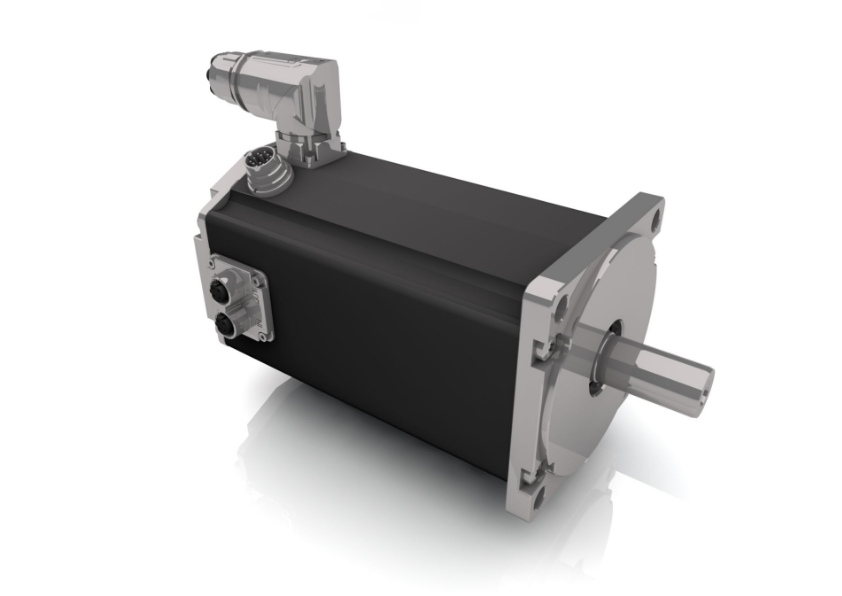
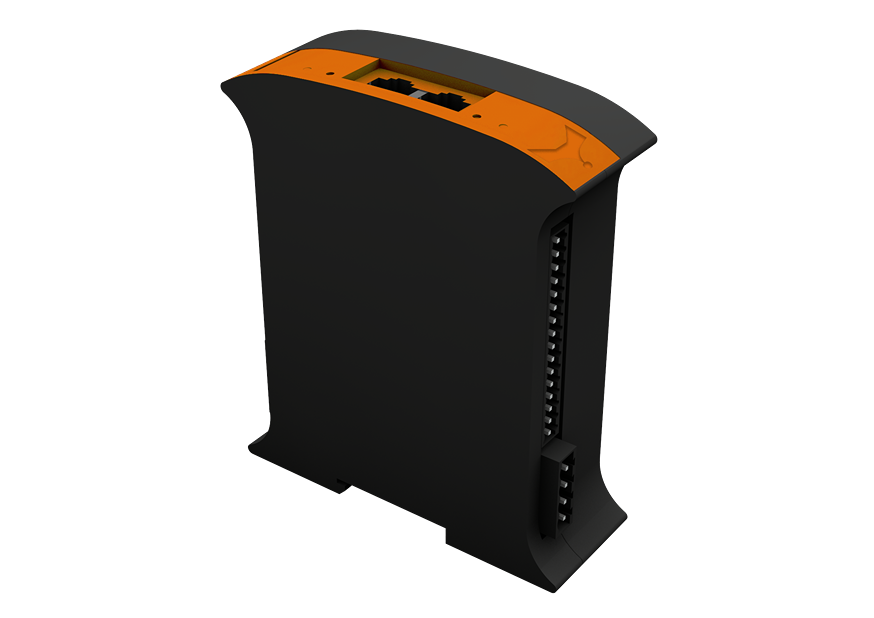
Os veículos autônomos estão se tornando cada vez mais importantes na intralogística, sem limites à vista para o design de tecnologia de acionamento de soluções logísticas. Quanto mais complexo o produto, mais complexos são os componentes – incluindo a solução do motor. A Dunkermotoren oferece um pacote completo para AGVs/AGCs/AMRs que consiste em motor, codificador, controlador e cubo redutor. Dependendo dos requisitos do cliente, este pacote está disponível com solução de controles integrados ou externos com interfaces de campo comuns como Profinet, Ethercat e Ethernet/IP, bem como funções de segurança (STO). Devido ao seu design eficiente, as soluções de motor são ideais para uso em sistemas de bateria e seu design robusto permite a operação em ambientes hostis. As soluções de motores da Dunkermotoren já oferecem um design padrão para quase todos os desafios em tecnologias de manuseio de materiais.

Por que oferecemos a solução de acionamento perfeita
Compact motors and hub gearboxes for the smallest installation space
Sistemas de acionamento inteligentes, conectados e robustos

Soluções de segurança como o STO diretamente integrado ao motor
Conceitos inovadores e eficientes de energia DC (IE 5) para aplicações em baterias
Designed for a wide temperature range
Longa vida útil

Melhor juntos


  • Interface modular no motor
  • CANopen, PROFINET, EtherCAT, Ethernet/IP – controlado por meio de IO digital, graças à Plataforma de Controle de Movimento
  • Consultoria de aplicações
  • IIoT – com a nexofox

    » Monitoramento de condições e controle remoto para sua aplicação
    » Manutenção preditiva para prontidão otimizada de sua produção
    » Apoio a padrões abertos como o Open Industry 4.0 Alliance e o Digital Industries World
  • Suporte à sua produção com soluções de automação da EGS Automation
AGV

Nossos componentes de acionamento em uso

  • Sistemas de transporte
    Os sistemas de transporte de paletes ou de pequenos contêineres oferecem uma ampla gama de oportunidades para as soluções de motor da Dunkermotoren. Seja no acionamento de tração, mecanismo de elevação, motores telescópicos, motores de dedo ou acionamentos por correia, a Dunkermotoren tem a solução de motor certa para cada aplicação de armazém.
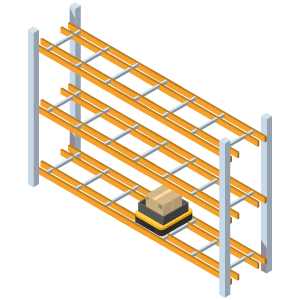
  • Separação de encomendas
    Quando se trata de dividir, desviar, redirecionar ou separar itens como cartas, encomendas ou peças de bagagem, nossos acionadores já se provaram ao longo de muitos anos.
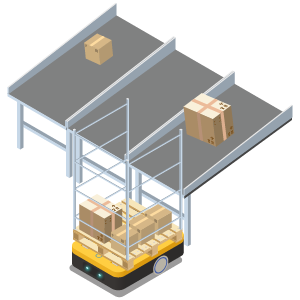
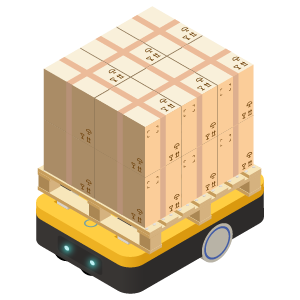
  • AGVs/AGCs/AMRs
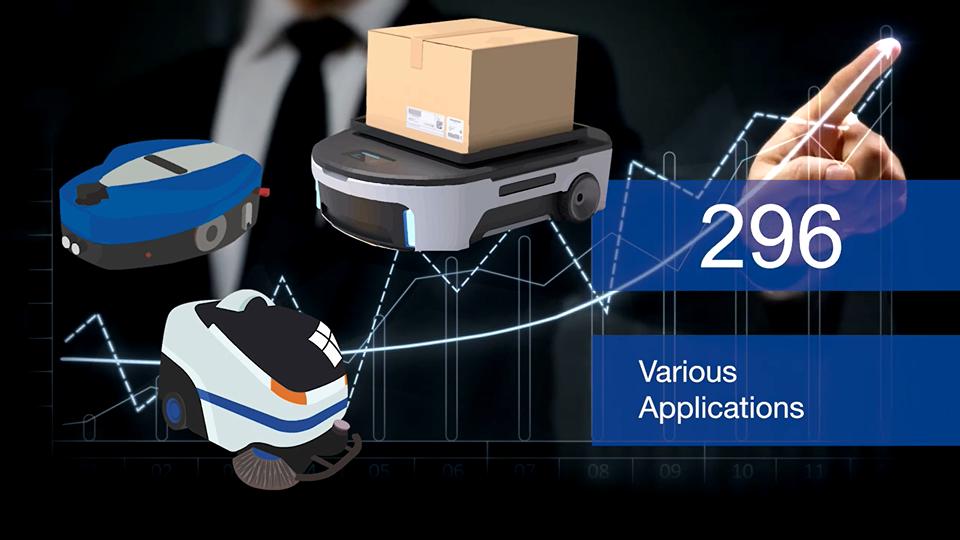
    Os veículos guiados automatizados aumentam a produtividade e melhoram a eficiência no armazenamento. Os produtos Dunkermotoren são usados em combinação com um redutor integrado como acionamentos de tração, projetados para altas cargas radiais e como motores de elevação.
    AGCS
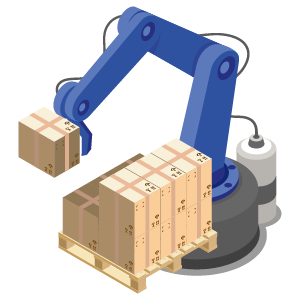
  • Robôs paletizadores
    Sistemas de paletização robótica da EGS Automation para paletização rápida e flexível. Tempos de ciclo mais curtos são alcançados por meio de sequências de programação otimizadas. A EGS Automation oferece ao usuário operação e manuseio intuitivos do sistema do robô. As ferramentas de fixação universais e modulares são adequadas para diversas peças de trabalho. Os robôs EGS se comunicam por meio de uma ampla variedade de sistemas de barramento ou OPC UA. As peças são identificadas por meio de tecnologia de sensores ou processamento de imagem.
    PALETTIERROBOTER
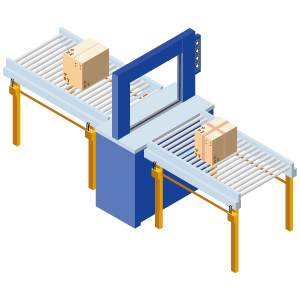
  • Cintagem
    Para o campo da tecnologia de cintagem (autônoma e integrada em linha), a Dunkermotoren oferece acionamentos inteligentes e controláveis, desde o desenrolamento da cinta até as soluções de selagem da cinta para todas as subetapas deste processo de embalagem e fixação da carga.
    UMREIFUNG
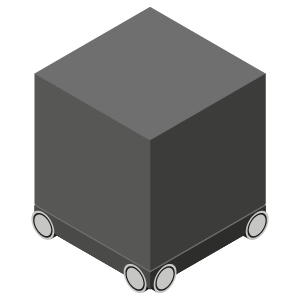
  • Robôs
    A importância dos robôs em armazéns de peças pequenas é cada vez maior. Os sistemas de motor da Dunkermotoren podem ser usados para levantar caixas de produtos no armazém ou até mesmo o próprio robô.
    BOTS
Comunicado à imprensa
05/14/2024
Com um motor BLDC Dunkermotoren BG 75 nas pistas de corrida deste mundo
A Dunkermotoren, uma marca da AMETEK, tem o prazer de equipar o carro de corrida da Equipe Milhagem da Universidade de Minas Gerais.   Em 2023, a Equipe Milhagem da Universidade de Minas Gerais, no Brasil, agitou a edição brasileira da Shell Eco-Marathon no Rio de Janeiro. Eles participaram com um novo carro de corrida movido por um motor BLDC de alta eficiência Dunkermotoren BG 75 atingindo a incrível marca de 367 km/kW, a equipe Milhagem estava ansiosa para competir internacionalmente e vencer o campeonato. Este ano, nos dias 3 e 7 de abril de 2024, a equipe participou da edição americana da Shell Eco-marathon, competindo com outras 28 equipes de cinco países no histórico Indianapolis Speedway. Entre todos os participantes, a Equipe Milhagem foi a primeira a passar pela rigorosa e minimalista inspeção técnica da Shell, demonstrando sua dedicação e esforço incansável na elaboração de um protótipo seguro, ágil e supereficiente. Os alunos aceleraram o carro na pista e obtiveram duas pontuações válidas, com a maior delas atingindo 188 km/kWh, o que os colocou em um sólido 15º lugar. A Dunkermotoren envia uma grande saudação à equipe da Universidade de Minas Gerais e espera ver o carro de corrida Milhagem subir no pódio dos vencedores novamente no próximo ano.   Downloads: Com um motor BLDC Dunkermotoren BG 75 nas pistas de corrida deste mundo (PDF)
05/07/2024
With linear movements straight towards efficient agriculture
The modern agricultural market is facing multiple challenges such as an increasing population to get fed up combined with a shortage of skilled labor and a limited availability of farmland. An extended level of automation is the answer to these challenges enabling precision farming and durable, long-lasting machines which operate both, reliable and energy efficient. The oldest movement in the world - Linear movements on the next level In tractors, seeders, harvesters, and sprayers, many movements are already automated. Linear movements are most often driven by hydraulic systems, which are complex, bulky, and require regular maintenance. As part of the fluid technology, hydraulic systems depend on oil to perform the necessary movement. Fluids, combined with the many components involved result in a risk of fluid leaks. Electric linear actuators, on the other hand, can perform the same tasks as hydraulic systems while having lower space and maintenance, and offering additional features in terms of control and positioning. While hydraulic systems were designed purely to perform linear movements, it is primarily features such as intelligence and communication capability, as well as precise positioning that are needed to offer additional features and overcome current challenges - and this is only possible with the help of electric linear actuators. How electric linear actuators improve overall agricultural efficiency and enable precision farming: While a simple linear movement with two positions (e.g. opened/ closed or folded/ extended) can be performed by both, hydraulic and electric technology, electric linear actuators operate more reliable and enable precise positioning of countless positions within the total range of motion. Precision: Driven by a rotative DC motor with integrated encoder, finest movements and adjustments can be performed, and controlled acceleration and deceleration as well as motion profiles can be realized, allowing precision farming to optimize the use of resources and the fields. Installation effort: Brushed or brushless DC motors are connected to a system by just a few cables. Integrated solutions where the motor control is included into the motor housing even reduce the required cabling, making the installation very easy compared to hydraulic or pneumatic systems. Durability: Packed in a robust and compact design, electric linear systems have less weak points than hydraulic solutions and are free of maintenance. Additionally, when adding integrated electronics with bus or Industrial Ethernet communication interfaces, operating data can be monitored and analyzed, allowing an optimized operation and predictive maintenance which further extends the system´s service life. Typical applications where electric linear actuators replace hydraulic driven movements in agricultural applications are: • Dosing and positioning of crops to keep a uniform seeding result • Dosing of fertilizer depending on the tactor´s speed • Movement and adjustment of the harvester header, depending on the crop • Control of the crop ejection Besides the “necessary” tasks to be performed during field work, features such as the definition of speed ramps for smooth start and stop movements, low cabling requirements, and a high efficiency allow additional linear movements to be economically automated by electric linear actuators, for example: • Automatic adjustments within and around the tractor cabin for additional comfort • Opening and closing tasks on the tractor or tanks Dunkermotoren linear motor solutions to meet the strong requirements in agricultural technology Dunkermotoren GmbH, a brand of AMETEK, is specialized in energy efficient rotative gearmotor development and market leader for integrated BLDC motors. The manufacturer from the black forest in Germany has combined this knowledge and the benefits of its smart BLDC motors with the linear actuator technology to develop durable and reliable electric linear motor solutions meeting the strong requirements of the agricultural market. The latest CAHB electric cylinder has been designed especially for the use in harsh environments. With IP protection classes up to IP 65 it can withstand dust and dirt without problems and can operate in an environmental temperature from -40 to +85°C. The integrated electronics can easily be programmed in C to define various positions, speed ramps, operating modes and critical thresholds. Thanks to various bus interfaces such as CANopen, Profinet, EtherCAT and EtherNet/IP the communication to a higher-level board control is made easy, and features such as condition monitoring and predictive maintenance become possible, to enable an optimized operation and reduce downtimes. In terms of energy efficiency, the CAHB completes the already efficient BLDC motor by using a ball screw version, to even minimize friction and maximize the system´s overall power. Conclusion: Efficient agriculture is achieved by precision farming, enabling a high degree of resource- and, thus, cost efficiency. Precise and energy efficient electric linear actuators are crucial in achieving this. Anyway, they must not only perform a simple movement, but must be aligned with the strong requirements of the agricultural market, in terms of durability, robustness, communication capability and control. Dunkermotoren offers with its CAHB electric cylinder maintenance free solutions with a high IP protection and integrated control electronics with various bus and Ethernet interfaces in a space saving design, enabling to perform all linear movements of mobile agricultural machines such as Seeders, harvesters, fertilizers, as well as autonomous agricultural robots. All those characteristics lead to a higher efficiency in the overall agricultural operations. The possibility to precisely adjust the harvester depending on the crop to be collected or the amount of fertilizer to be spread enables economical use of costly resources. Energy efficiency, on the other hand, allows more energy and, thud, cost to be saved, while paving the way for battery-driven, autonomous applications which might be able to combat the skilled labor shortage. Finally, durability leads to a smooth operation with less downtimes which, of course, is directly reflected by a systems output and productivity. Downloads: With linear movements straight towards efficient agriculture (PDF)
03/27/2024
Digital twins? Administration shell? These concepts are crucial – today!
Dunkermotoren, an AMETEK brand specializing in integrated BLDC motors, is spearheading innovative IIoT solutions under the nexofox label. These solutions offer customers unprecedented opportunities to analyze and integrate drive data. One of the primary focuses of Dunkermotoren's efforts is the development of comprehensive digital processes in collaboration with its customers. At the heart of these endeavors lies the creation of digital twins, leveraging the concept of the Asset Administration Shell (AAS). The significance and potential of this approach might not be immediately apparent, but numerous use cases shed light on its promising nature. In the realm of product and factory digitalization, the digital twin is emerging as a central component. Dunkermotoren has collaborated with other renowned component manufacturers through the Open Industry 4.0 Alliance (OI4) to explore this concept. Particularly for components, the relevance of digital twins is already evident, with existing use cases demonstrating the need to supply product documentation and information digitally and in standardized formats - a task that could be significantly facilitated by standardized digital twins. Looking ahead, numerous factors further highlight the importance of this technological approach. It's foreseeable that the EU will impose increasingly stringent regulatory and documentation requirements on delivered products. Examples include the Digital Product Passport (DPP) under the Ecodesign for Sustainable Product Regulation (ESPR) and the CO2 footprint outlined in the Corporate Sustainability Reporting Directive (CSRP). Additionally, IT security demands, such as those outlined in the Cyber Resilience Act, are essential, particularly concerning software patching for products. What unites these regulations is the constant expansion of product information required from customers, end-users, and other stakeholders in the value chain. Meeting these demands necessitates standardized aggregation of product-related data alongside uniform data provision - a task ideally suited for the digital twin framework. Looking a bit further ahead, there are even more exciting possibilities emerging in how digital services can truly add value. This is an area where component manufacturers are dedicating significant effort, but one that has often faced the challenge of data sovereignty. Here's the issue: Machine manufacturers use components from various component manufacturers to build their machines. These machines are then operated by the customers of the machine manufacturers. The crucial data, which can provide insights into the product status, is generated only when the machine operates in the factory. However, the sovereignty over this data doesn't lie with either the component manufacturer or the machine manufacturer; it rests with the plant operator where the data is generated. While pilot and flagship projects can sometimes address this problem through intricate individual contracts, this approach typically becomes an insurmountable obstacle for mass production. From the perspective of component manufacturers, the digital twin could offer a key solution. If a digital twin were provided alongside the physical product and integrated by the machine manufacturer, it could then be transferred to the machine operator and incorporated into their IT environment. Consequently, the data generated from operating the installed component would also enhance the digital twin sourced from there. If analyses, such as identifying mechanical wear, require engine data, the system operator could voluntarily share this data with the machine and component manufacturers through the synchronization of digital twins along the value chain. The component manufacturer utilizes appropriate algorithms to determine the data records communicated through the chain of digital twins, then sends the results to the machine manufacturer, who in turn shares it with the machine operator. This enables the machine manufacturer to integrate a digital service for detecting component wear into its predictive maintenance solution and offer it to customers. This approach fosters transparent, voluntary business transactions. Another possibility for the component manufacturer is to purchase the data from the machine operator, who may also need to acquire the analysis if required. Standardized digital twins and data room networking would facilitate the implementation of digital value-added services throughout the value chain. While a few pieces of the puzzle remain before this scenario can be fully realized, there is a clear trend in this direction, prompting Dunkermotoren to devote significant efforts to developing the necessary technologies already today. The Technology Explained Briefly As highlighted in the aforementioned cases, a standardized digital twin plays a crucial role in implementing digital value-added services. But what exactly does such a twin entail? Dunkermotoren identifies the administration shell (AAS) as a fundamental technology in this regard. Its standard is already acknowledged across various industries and initiatives like Catena-X, Factory-X, the VDMA, the Industrial Digital Twin Association (IDTA), and the Open Industry 4.0 Alliance. This standard is increasingly discussed and adopted on a broader scale. Like the evolution of the Internet, the appeal here lies in a decentralized approach. This enables the exchange of data across different environments through a common standard. Drawing parallels to the Internet, various product catalogs can be likened to browsers, corporate IT to homepages, and the AAS to the IP protocol. Cross-company digitalization and the industrial data economy can only thrive if a heterogeneous system is established, allowing everyone to exchange and transact data under clearly defined rules. Dunkermotoren and the IIoT Guided by this vision, Dunkermotoren has taken on the challenge of administration shells and digital twins. In the current iteration, associated documents and technical data can be accessed by scanning a 2D code on the motor. Dunkermotoren is gradually implementing this feature across its entire portfolio. However, from a functional perspective, this marks just the beginning. Expanding upon this, Dunkermotoren is also working on providing CO2 footprints, exchanging time series data, and directly integrating digital twins into customers' ERP or PLM systems. These initiatives are being pursued collaboratively with other companies within the Open Industry 4.0 Alliance. Hands-on - testing the technology live As already mentioned, in addition to all the technology, collaboration and exchange with other companies is also an essential topic in the development of interoperable solutions. This is where the IDTA and OI4 provide an ideal environment for Dunkermotoren. The IDTA is responsible for the basic standardization and definition of the administration shell, which is particularly essential for functioning interoperability. The OI4 provides tangible use cases and best practices for successful implementation across various industries. If you would like to look into the future, you can already test the whole construct live! As part of Hanover Fair 2024, the Open Industry Alliance is once again organizing a Digital Twin Challenge. This will impressively demonstrate how open and interoperable the digital twin approach is and how easy it is to get started. In the form of a "rally", digital twins of real products can be scanned or collected at various trade fair stands. Join the challenge and see how digital, cross-company collaboration will be key to future competitiveness.   Downloads: Digital twins? Administration shell? These concepts are crucial – today! (PDF)
03/27/2024
Predictive Maintenance à la nexofox
The malfunction of machines and systems always poses a significant cost burden for companies. Costs of 120,000 euros or more per hour are not seldom for such downtimes.1  Profitability relies heavily on smooth operations and production. Unplanned downtimes exacerbate the situation, making it challenging to predict timing, duration, and associated costs.  To mitigate these risks, implementing optimized maintenance planning is advisable. Predicting specific error patterns is a crucial step toward condition-based maintenance, enhancing predictive maintenance strategies. The team at Dunkermotoren's digital brand, nexofox, specializes in preparing the manufacturer's drive systems for such maintenance approaches.  Adhering to the philosophy of "More than Motors," nexofox progressively expands the software product portfolio of Dunkermotoren, an AMETEK brand. A key component is the "Predictive Maintenance" software, offering customers a new option for automatic, condition-based monitoring of their entire drive systems. This software not only alerts customers to impending failures but also provides continuous updates on the system's current status. One distinct advantage of nexofox's "Predictive Maintenance" is its reliance solely on existing motor sensors, eliminating the need for additional electronic components. This approach not only saves space but also offers significant cost savings.  Predictive Maintenance in Detail In the initial stage of condition-based drive monitoring, the focus is intentionally placed on assessing the wear of the mechanics linked to the motor. This approach aims to optimize mechanical service life by detecting typical, gradual wear effects, such as those on an attached gearbox. Moreover, customers receive immediate alerts regarding abrupt changes that could potentially result in an unplanned downtime if not addressed promptly. Accurate detection of specific fault patterns necessitates collaboration with the customer, as they have the most detailed knowledge about their application's structure and can appropriately classify fault patterns. The initial version of nexofox's predictive maintenance solution offers customers a standardized basis as a tool for anomaly detection and unplanned downtime reduction, with room for individual adaptations. Like all nexofox software products, Predictive Maintenance is provided to customers as a Docker container, ensuring seamless integration into any existing industrial IoT solution without requiring a permanent internet connection. Predictive Maintenance operates locally on the EDGE gateway utilized by the customer. An internet connection is only necessary if the customer opts to share metadata with the nexofox team. However, consent is not obligatory for the software's full functionality. Nonetheless, the parameters processed by the software contribute to the ongoing optimization of the software´s algorithm. Subsequently, customers will have access to the latest algorithm version through regular updates. Downloads: Predictive Maintenance à la nexofox (PDF)