

 Contate-nos
12/04/2023
Electric energy for 32,600,000 years
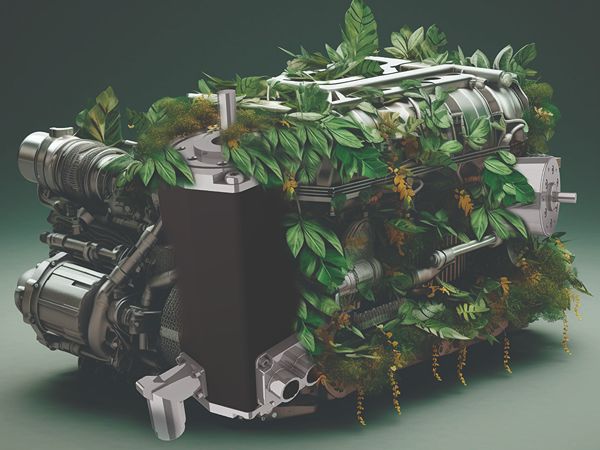 In 2019, electric energy consumption by the German industrial sector was 218.4 TWh. Around two-thirds of this is required for conversion into "mechanical energy for operating motors or machines", and corresponds to approx. 28% of the total electric energy consumption in Germany!* In other words, this energy could serve a single-family home with four people for 32,600,000 years. Together with its customers, Dunkermotoren, an AMETEK brand, can help to reduce this huge consumption and thus save both costs, and CO2 emissions.
 But how should this work? Let's take a look at some possibilities:
Use of energy-efficient electric motors
To reduce the power consumption for the operation of motors, a classification for the energy efficiency of drive systems has been defined within the IEC 61800-9-2 standard. However, this standard refers only to grid powered motors under continuous operation which are running at or near rated load. Servo motors such as those from Dunkermotoren are not considered in this standard. They are not fed directly from the grid or have a rated power below the 120 W specified. But it is precisely such solutions that are used in many industrial applications and, thus, causes a not inconsiderable proportion of power consumption. The energy efficiency of servo motors should therefore not be ignored.Dunkermotoren servo motors can impress in this regard even without IE classification: When comparing the efficiencies of Dunkermotoren permanent magnet motors with alternative motor concepts classified according to IEC, Dunkermotoren smart BG motors have a higher efficiency at the same power. Thanks to this high efficiency, less energy is converted into waste heat and thus more energy is used for mechanical movement. In other words, less energy is required for unchanged motion patterns, thus reducing the total power consumption.
The design of a motor solution
Most applications in which Dunkermotoren (or comparable) servo motors are used have very specific motion patterns. In an automated guided vehicle, for example, that must accelerate and decelerate heavy loads several times a day, most of the energy is required for precisely this starting and braking motion. These short peaks make it difficult to find an optimal drive solution. The application Engineering experts at Dunkermotoren support its customers in designing their drives right from the beginning of their development projects. In some cases, it can make sense to select a motor that is mathematically too small for the required acceleration and deceleration torque peaks. But due to the long pauses between motion cycles and the high overload capacity of the company´s BLDC motors, a smaller motor is often sufficient. This has a lower material requirement during production and lower power consumption, thus protecting the environment and the customer´s wallet.Vector Control
Unlike many other suppliers on the market, Dunkermotoren offers control of its motors via so called Vector Control. Vector control enables optimized motor operation in terms of power consumption. More precisely, it ensures that only as much current flows into the motor winding as the motor can convert to build up torque. This significantly increases the efficiency of the drive and allows more energy to be used for actual movement.Compared to conventional, block commutated motors, Dunkermotoren motors can thus save up to 15% energy for executing the same movement.
Integrated motor solutions
Integrating various functionalities into the motor can significantly improve the sustainability of motors by making them much more resource-efficient in production. Integrating the electronics directly into the motor housing, for example, eliminates the need for the electronics housing previously required. The cables and plugs required for connection, as well as parts of the control cabinet are also no longer necessary. Compared to motors without integrated functions, valuable resources are thus saved with integrated drive solutions.Motion Control via the Cloud
On the way to more sustainability in the use of its products, the digital twin is an important tool for the drive technology manufacturer. It enables users to access all relevant information at any time via a central structure. Documents, information such as the total CO2 emissions caused during the production of individual components, or the origin of the materials used are thus easily available. The technical design of the Dunkermotoren digital twin is based on the standardized and manufacturer-independent administration shell of the Open Industry 4.0 Alliance. This means that the access location does not change, even for data from different components and manufacturers across the entire supply chain. Resources used are thus fully documented and can be viewed in an uncomplicated manner. With the aim to contribute to resource-saving use of its motors beyond manufacturing, the software services of Dunkermotoren´s IIoT brand nexofox can provide recommendations for optimized motor setting by evaluating data. These optimized settings can be used manually or automatically on the motor solution.Conclusion
With various instruments, including not only the hardware of the Dunkermotoren motors but features far beyond, the drive technology manufacturer from the black forest and its own IIoT brand nexofox can contribute to reducing the immense power consumption for the operation of motors and machines. By using its drive solutions in your application, you are also contributing to a green future – without any additional effort.Downloads:
Electric energy for 32,600,000 years (PDF)

Martina Jägler
Marketing Content Management and Lead Processing
Dunkermotoren GmbH
Allmendstraße 11
79848 Bonndorf, Germany
- Phone: +49 7703 930 314
- Email: Martina.Jaegler@ametek.com
Subscribe for press mailing list