

 Contact Us
Brushed DC Motors
Dunker is your one-stop shop for top-quality brushed DC motors (GR/G series). These workhorse motors are built to tackle demanding applications and deliver long-lasting performance.
- Smooth Operation: Our motors boast low cogging torque, minimizing jerky movements and ensuring smooth, precise control.
- Built to Last: Rugged design and low inertia keep these motors running strong, even in harsh environments.
- Customizable Power: We offer a wide range of gearboxes, brakes, and encoders to create the perfect motor solution for your specific needs.
- Neodymium Free: Our Brushed MotorsMatches - and often exceeds the performance of BLDC motors from other brands, without relying on Rare Earths.


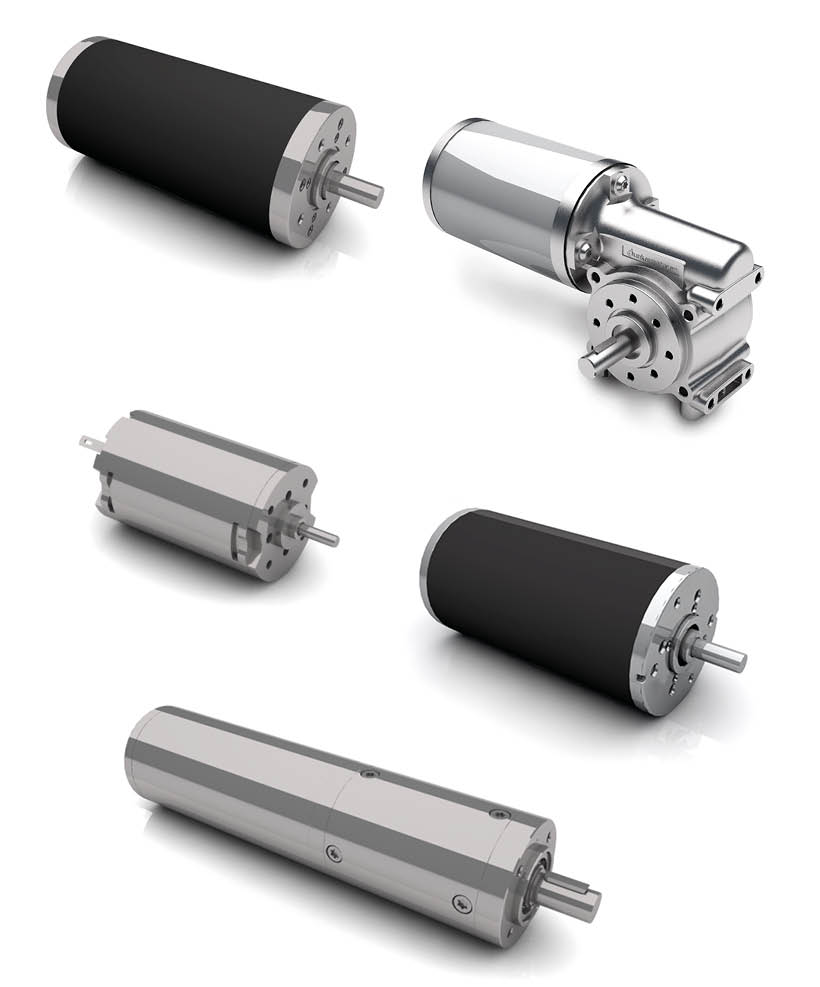
Specifications
| Applied Voltage | 12 / 24 / 40 / 48 / 60 | VDC |
|---|---|---|
| Maximum power | 3,7 - 817 | W |
| Nominal torque | 1 - 67 | Ncm |
| Nominal speed | 2500 - 4000 | rpm |
Dunkermotoren's GR/G series brushed DC motors are renowned for their exceptional performance and durability. Here's what makes them the perfect choice for your toughest jobs:
- Long-lasting: Outlast competitor motors with extended lifespan.
- Smooth operation: Low cogging torque minimizes jerkiness for precise control.
- Highly efficient: Get the most out of your energy consumption.
- Fast and responsive: Experience quick starts and smooth acceleration
- Easy to control: Enjoy excellent regulation characteristics.
- Maintenance-free: Spend less time tinkering, more time working
- Built tough: Rugged design handles demanding environments
- Handles overload: Superior short-time overload capacity keeps your motor safe
- Protects itself: Surface protection and low EMI radiation minimize damage.
- Sealed tight: IP ratings up to IP 69K ensure protection from dust and water.
- High quality: Experience the precision of fully automated production.
Downloads Series


Operating Manuals
-
Product Datasheets
-
FAQ's


-
How does the connection resistance behave with the brushed GR motor?The connection resistance results from the nominal voltage/starting current.
-
Can the motor be operated at a voltage other than the nominal DC voltage? How does the characteristic diagram change if the supply voltage is not equal to the rated voltage?Yes, the motor can also be operated with different voltages. For motors with integrated electronics, the permissible limits of the electronic components must be observed.
Motors from Dunkermotoren are usually designed for a standard industrial rated speed in the range of 3000 to 4000 rpm. If an application requires it, the speed can be easily adapted to the desired operating point by selecting a different winding.
Example: When using a GR motor with nominal 12 V at a supply voltage of 24 V, the no-load speed doubles and the entire motor characteristic curve shifts parallel accordingly. This results in a significantly increased continuous output power of the motor. -
How does Dunkermotoren specify the motor power?The nominal power P(N) is the output power of the motor which can be generated permanently, calculated from nominal speed and nominal torque. The motors from Dunkermotoren are always measured according to EN60034 in thermally insulated condition. The measurement methods for the specification of motors are not standardized and sometimes differ significantly between the different suppliers. This makes it difficult to compare values even with comparable motor concepts and speeds.
Where Our Brushed DC Motors Are Used
Our brushed DC motors with integrated controllers and gearmotors are versatile and reliable, making them ideal for a wide range of applications across various industries. Here are some detailed examples of where and how our brushed DC motors are utilized:
Conveyor Systems
Brushed DC motors enhance conveyor systems by offering precise speed control and high efficiency. They are ideal for transporting materials smoothly and reliably, reducing maintenance and improving overall system performance. For instance, in a warehouse setting, brushed DC motors power the conveyors that move goods from storage areas to shipping docks. Their ability to operate at variable speeds allows for the efficient handling of different types of products, optimizing workflow and reducing energy consumption.
Door Automation
Dunkermotoren brushed DC motors are a trusted solution for automated door systems, offering reliable performance, compact design, and precise motion control. Ideal for automatic sliding doors, swing doors, and industrial access gates, these motors ensure smooth, quiet operation—essential for commercial buildings, hospitals, and transportation hubs. Their ability to handle frequent start-stop cycles and variable loads makes them perfect for high-traffic environments. With energy-efficient operation and long service life, Dunkermotoren brushed motors enhance safety, accessibility, and system uptime in modern door automation applications.
Outdoor Cleaning
Robots Brushed DC motors are used in outdoor cleaning robots for their high-power density and efficiency. These motors enable precise control and quick movements, making them ideal for tasks such as lawn mowing, leaf blowing, and snow removal. For example, a robotic lawn mower equipped with brushed DC motors can navigate complex terrains, adjust its cutting height, and operate for extended periods on a single battery charge, providing reliable and efficient lawn maintenance.
Medical and Laboratory Devices
In medical and laboratory environments, brushed DC motors are used in devices such as infusion pumps, centrifuges, and sample analyzers. Their smooth, controlled motion and compact size make them well-suited for portable and benchtop equipment where precision and reliability are critical.
Vending and Access Systems
Brushed DC motors are frequently found in vending machines, ticket dispensers, and access control systems like turnstiles and gates. They provide reliable, repeatable motion for mechanisms that require frequent actuation with minimal maintenance.
Textile Machinery
In textile production, brushed DC motors are used in thread winding machines, fabric feeders, and small-scale looms. Their ability to maintain consistent speed and torque under varying loads makes them ideal for delicate, repetitive tasks in textile processing, especially in compact or semi-automated setups.
How to Select the Right Brushed DC Motor for Your Application
Choosing the right brushed DC motor is essential for achieving reliable performance, efficiency, and longevity in your application. This guide outlines the key factors to consider when selecting a brushed DC motor:
1. Understand Your Load Requirements
- Torque Needs: Identify the continuous and peak torque your application demands. Brushed DC motors are well-suited for applications requiring high starting torque and smooth acceleration.
- Speed Range: Determine the required operating speed. Brushed DC motors offer a wide speed range and are ideal for variable-speed applications.
- Load Profile: Consider whether the load is constant, variable, or intermittent. This affects motor sizing and thermal management.
- Combination: Define your operating points and review the motor performance curves. Ensure your operating points are within the motor's capabilities.
2. Choose the Right Motor Size and Form Factor
- Motor Sizes: Choose the appropriate motor size based on your space constraints and torque requirements. Larger motors generally provide higher torque but may have different speed characteristics.
- Compact Design: Ensure the motor fits within the physical dimensions of your application. Our DC Motors motors are designed to offer high torque in a compact form factor.
3. Voltage and Current Ratings
- Operating Voltage: Match the motor’s rated voltage with your power supply. Common options include 12V, 24V, 48V and 60V.
- Current Draw: Ensure your power source can handle the motor’s stall and running current. Motors with different winding options allow for flexibility in voltage and current combinations.
4. Evaluate Duty Cycle and Thermal Considerations
- Duty Cycle: Define how often and how long the motor will run. Brushed DC motors are suitable for both continuous and intermittent duty cycles.
- Cooling Needs: For high-load or continuous-duty applications, consider additional cooling or motors with integrated ventilation.
5. Consider Environmental Conditions
- Protection Ratings: Choose motors with appropriate IP ratings for dusty, humid, or outdoor environments.
- Temperature Range: Ensure the motor can operate reliably within your application’s ambient temperature range.
6. Integration with Gearboxes and Feedback Devices
- Gearboxes: For applications requiring high torque at low speeds, pair the motor with a Planetary, Angular or Hub Gearbox.
- Encoders: Add encoders for precise speed and position feedback, especially in closed-loop control systems.
7. Control and Drive Compatibility
- Motor Controllers: Select a controller that supports brushed DC motors and offers the control features you need—such as PWM speed control, current limiting, or direction switching.
- Interface Options: We offer controllers with analog, digital, and industrial communication interfaces (e.g., CAN, RS485).
8. Customization and Special Requirements
- Tailored Solutions: Need a special shaft, connector, or cable length? Our engineering team can customize motors to meet your exact specifications.
- Noise and EMI: For sensitive environments, we offer low-noise and EMI-optimized motor variants.
9. Expert Support
- Free Consultation: Not sure which motor fits your needs? Our experts are here to help you select and configure the ideal brushed DC motor for your application.
Benefits of Brushed DC Motors
1. Smooth and Efficient Speed Control
Brushed DC motors from Dunkermotoren offer excellent speed regulation across a wide range, making them ideal for applications requiring smooth acceleration and deceleration. Their linear speed-torque characteristics allow for intuitive and precise control using simple voltage variation.
2. High Starting Torque
One of the standout advantages of brushed DC motors is their ability to deliver high torque at startup. This makes them particularly well-suited for applications that require immediate force, such as conveyors, actuators, and mobile robotics.
3. Simple and Robust Design
With a straightforward construction that includes brushes and a commutator, brushed DC motors are easy to operate and maintain. Their mechanical simplicity contributes to high reliability and ease of integration into a wide variety of systems.
4. Cost-Effective and Widely Available
Brushed DC motors are generally more affordable than other motor types, such as brushless or servo motors. Their widespread availability and low cost make them a practical choice for budget-conscious projects without compromising on performance.
5. Easy Integration and Control
Dunkermotoren DC-Motors are compatible with basic control electronics, requiring minimal setup. Whether you're using analog voltage control or PWM (pulse-width modulation), brushed DC motors can be quickly integrated into new or existing systems with minimal effort.
Brushed DC Motors: Understanding Frame Sizes
Brushed DC motors come in a variety of standardized frame sizes, which help ensure compatibility across different mechanical systems. Choosing the right frame size is essential for achieving the desired performance while fitting within your design constraints. Here's a breakdown of the common frame sizes we offer:
Frame Size 30 mm
- Dimensions: 30 x 30 mm
- Applications: Ideal for compact electronics, small actuators, and battery-powered handheld devices.
- Features: Ultra-compact and lightweight, this size is perfect for space-constrained applications where efficiency and portability are key.
Frame Size 42 mm
- Dimensions: 42 x 42 mm
- Applications: Commonly used in portable tools, light automation systems, and robotics.
- Features: Offers a balance between size and torque, making it suitable for applications that require both compactness and reliable performance.
Frame Size 53 mm
- Dimensions: 53 x 53 mm
- Applications: Suitable for medical devices, lab automation, and compact industrial drives.
- Features: Provides increased torque over smaller sizes while maintaining a compact footprint, ideal for medium-duty applications.
Frame Size 63 mm
- Dimensions: 63 x 63 mm
- Applications: Used in textile machinery, vending systems, and light-duty industrial equipment.
- Features: Delivers solid torque and durability, making it a versatile choice for continuous operation in semi-industrial environments.
Frame Size 80 mm
- Dimensions: 80 x 80 mm
- Applications: Designed for demanding applications such as mobile platforms, outdoor equipment, and heavy-duty tools.
- Features: Offers high torque and robust construction, suitable for high-load tasks and extended duty cycles.
Comparison Brushed DC Motor Frame Sizes
| Frame Size | Motor length options (mm) | Typical Applications | Key Features |
|---|---|---|---|
| 30 mm | 30x10 / 30x20 / 30x45 | Compact electronics, small actuators, handheld devices | Ultra-compact, lightweight, ideal for space-constrained designs |
| 42 mm | 42x25 / 42x40 | Portable tools, light automation systems, robotics | Compact size with reliable torque, versatile for small systems |
| 53 mm | 53x30 / 53x58 | Medical devices, lab automation, compact industrial drives | Increased torque with compact footprint, ideal for medium-duty use |
| 63 mm | 63x25 / 63x55 | Textile machinery, vending systems, light-duty industrial equipment | Durable and efficient, suitable for continuous operation |
| 80 mm | 80x45 / 80x80 | Mobile platforms, outdoor equipment, heavy-duty tools | High torque and robust design for demanding applications |
Brushed DC Motors vs. Other Motor Types
When selecting a motor for your application, understanding the differences between brushed DC motors and other common motor types—such as stepper motors and servo motors—is essential. Here's a detailed comparison to help guide your decision:Brushed DC Motors
Advantages:- Simple and Intuitive Control: Brushed DC motors are easy to operate using basic voltage or PWM control, making them ideal for straightforward applications.
- High Starting Torque: These motors deliver strong torque at startup, which is beneficial for applications like conveyors, actuators, and mobile platforms.
- Cost-Effective and Readily Available: Brushed DC motors are generally more affordable and widely available than servo motors, offering a practical solution for many use cases.
- Compact and Versatile: Available in a wide range of sizes and configurations, they can be easily integrated into both consumer and industrial systems.
- Brush Wear and Maintenance: The presence of brushes means periodic maintenance is required, as brushes wear down over time and can affect performance.
- Lower Precision: Without feedback systems, brushed DC motors are less suitable for applications requiring precise positioning or speed control.
- Reduced Efficiency at High Loads: Compared to brushless or servo motors, brushed DC motors may generate more heat and have lower efficiency under continuous heavy loads.
Stepper Motors
Advantages:- Precise Positioning: Stepper motors move in fixed steps, making them ideal for applications like 3D printers and CNC machines where accuracy is key.
- High Torque at Low Speeds: They maintain torque even at low speeds without needing a gearbox.
- Open-Loop Simplicity: No feedback system is required for many applications, simplifying control and reducing cost.
- Limited Speed and Efficiency: Torque drops off at higher speeds, and they can be less efficient than DC motors in continuous operation.
- Resonance and Vibration: Without proper tuning or damping, stepper motors can exhibit vibration or noise during operation.
Servo Motors
Advantages:- High Performance and Precision: Servo motors offer closed-loop control with feedback, enabling precise control of position, speed, and torque.
- Smooth and Dynamic Motion: Ideal for high-speed, high-precision applications such as robotics, automation, and CNC machining.
- Efficient Operation: Servo systems are optimized for energy efficiency and performance under varying loads.
- Higher Cost and Complexity: Servo systems require encoders, controllers, and tuning, which increases both cost and system complexity.
- Overkill for Simple Tasks: In applications where basic motion is sufficient, servo motors may be unnecessarily complex and expensive.
Comparison Motor Types
| Motor Type | Advantages | Disadvantages | Typical Applications |
|---|---|---|---|
| Brushed DC Motors |
Simple and low-cost control High starting torque Compact and widely available Easy to integrate |
Brush wear requires maintenance Lower efficiency Less precise without feedback Shorter lifespan |
Household appliances Toys Vending machines Actuators Pumps Low-cost automation |
| Stepper Motors |
Precise open-loop positioning High torque at low speeds Cost-effective Simple control electronics Reliable with no brushes |
Limited high-speed performance Can lose steps under overload Resonance and vibration at certain speeds |
3D printers CNC machines Robotics Medical devices Camera sliders |
| Servo Motors |
High speed and torque Closed-loop precision Smooth and dynamic motion High efficiency Suitable for complex motion profiles |
Higher cost Requires tuning and feedback systems More complex integration |
Industrial automation Robotics Packaging machinery CNC machining Conveyor systems |
Brushed DC Motors with Planetary Gearboxes
Key Features
- High Torque Output: Planetary gearboxes multiply torque efficiently, ideal for demanding loads.
- Compact Design: Space-saving motor-gearbox integration for tight installation environments.
- Customizable Options: Tailor gear ratios, shaft types, and connectors to your needs.
- Durable Construction: Robust materials and design ensure long service life.
Technical Highlights
- Voltage Range: 6V – 60V
- Speed: Up to 6000 RPM (motor), adjustable via gear ratio
- Gear Ratios: From 4:1 to 512:1
- Torque: Up to 10 Nm (depending on configuration)
- Shaft Options: D-shaft, round, or custom
- Mounting: Standard flange or custom brackets

Brushed DC Motor with Angular Gearboxes
Key Features
- High Torque Output: Excellent torque multiplication in a compact form.
- Self-Locking Capability: Prevents back-driving, ideal for holding loads in place without power.
- Compact Design: Right-angle configuration saves space in tight installations.
- Simple & Robust: Fewer moving parts mean lower maintenance and higher durability.
- Smooth & Quiet Operation: Low noise levels, perfect for indoor or sensitive environments.
Technical Highlights
- Voltage Range: 6V – 60V
- Gear Ratios: Typically from 10:1 to 300:1
- Torque Output: Up to 20 Nm (depending on configuration)
- Speed: Low output RPM for controlled movement
- Mounting Options: Flange or foot mount
- Shaft Orientation: Right-angle output

FAQ´s on Brushed Motors
-
What is a brushed motor?A brushed DC motor, also known as PMDC motor or brushed electric motors, is a type of electric motor that operates on direct current (DC) electricity. It uses brushes and a commutator to control the current flow to the motor windings. The main components of a brushed DC motor include:
- Stator: The stationary part of the motor that provides a magnetic field.
- Rotor: The rotating part of the motor where the current flows, creating an electromagnet.
- Brushes: Typically made of carbon, these conduct electricity between the stationary wires and the rotating rotor.
- Commutator: A rotary switch that reverses the direction of current flow through the rotor windings, ensuring continuous rotation.
-
How does a brushed motor works?A brushed DC motor operates through the interaction of magnetic fields created by the stator and rotor. When a DC voltage is applied to the motor, current flows through the brushes and the commutator to the rotor windings. This current generates a magnetic field around the rotor.
The rotor's magnetic field interacts with the magnetic field of the stator, creating a force that causes the rotor to turn. As the rotor turns, the commutator periodically reverses the direction of current flow through the rotor windings. This reversal ensures that the magnetic fields continue to interact in a way that maintains the rotation. The brushes maintain electrical contact with the rotating commutator, allowing continuous current flow and sustained rotation of the rotor.
This process repeats as long as the motor is powered, resulting in continuous rotation. -
Where are brushed motors used?Brushed DC motors, also known as , are characterized by their simple construction, cost-efficiency, and high starting torque. They are typically used in applications where these features are advantageous. Common uses include:
- Household Appliances: Such as vacuum cleaners, blenders, and electric toothbrushes.
- Automotive Systems: Including car starters, windshield wipers, and power windows.
- Power Tools: Drills, saws, and other handheld tools frequently use these motors.
- Industrial Equipment: Used in conveyor belts, pumps, and other machinery where precise control is not critical.
- Small Electronics: Devices like fans, hairdryers, and some types of printers.
- Fans and Ventilators: For air circulation and cooling.
- Conveyor Belts: In various industrial applications.
- Door Drives: For automatic doors and gates.
- Toys: Many battery-operated toys use brushed DC motors for movement.

