Machinery and plant engineering

Machinery and plant engineering

Next Level Automation 

Automation continues to be the key issue in all markets and applications for sustainable competitiveness and success. Particularly in the wood, textile, plastics and printing industries, reliable efficiency increases through automation are of great importance. This requires the highest quality and safety standards in all areas. A production standstill must be avoided at all costs. That is why we rely on open standards and transparency with our smart drives and our nexofox team. Our team knows our drives best and supports you with predictive maintenance, condition monitoring, remote control and other smart services that enable smooth production.
Machinery and plant Engineering

Why we offer the perfect drive solution


Intelligent, connected and robust drive systems
Modular System
Innovative, energy-efficient DC concepts (IE5)
Integrated safety solutions
Long service life
High IP protection class

Better Together


  • With our modular system we are extremely flexible and can configure the best possible drive solution for a wide range of applications / requirements
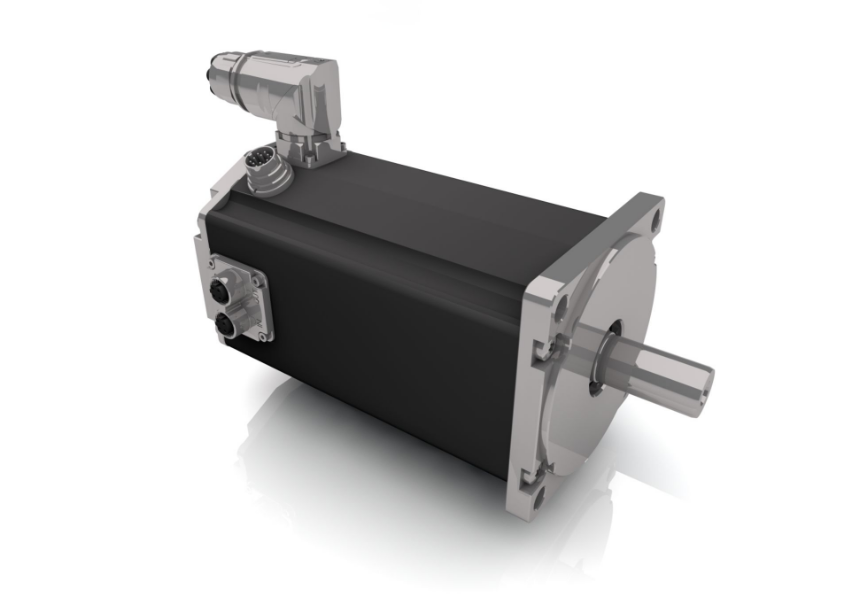
  • Compact, robust & energy efficient drive solutions, from motor to gearbox to integrated power electronics - all from one single source
  • CANopen, PROFINET, EtherCAT, EtherNet/IP, control via digital IO's is no problem, thanks to the integrated motor control platform
  • We rely on open standards and help shaping the future

    » Member of the Open Industry 4.0 Alliance and Digital Industries World since 2019

    » Member of the Industrial Digital Twin Association (IDTA) since 2022.
  • Solutions for robust use with high IP protection classes, IP54 and higher, available
  • With nexofox, we are breaking new ground - from pure product provider to full service provider

Our Drive Components in use

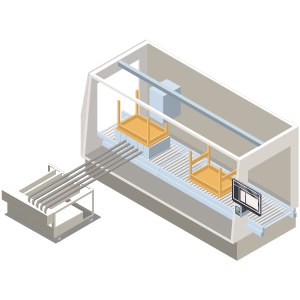
  • Wood industry
    Solid wood processing and furniture manufacturing is a complex process - cutting, planing, profiling, galvanizing, gluing. Our motors handle the width and format adjustments of the equipment in this process. With our brushless DC motors, we are also represented in tooling and sanding systems, as well as profile printing and edge banding. Users of planing machines, stationary and throughfeed woodworking machines appreciate the integrated Ethernet interfaces, IP protection classes and safety solutions of our drives.
    Motors for Wood industry
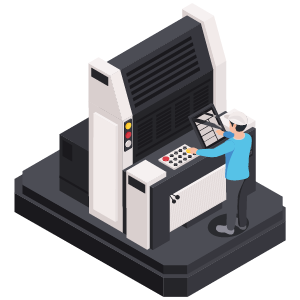
  • Printing industry
    Our drives can be found both in sheetfed offset presses and in digital printing. In addition to the paper feed and print head adjustment, they control, for example, the feeding of the printing plate/washing blanket and carry out punching and folding movements. Digital large-format printing and the latest 3D metal and plastic printers also benefit from our robust motors with integrated control.
    Motors for Printing industry
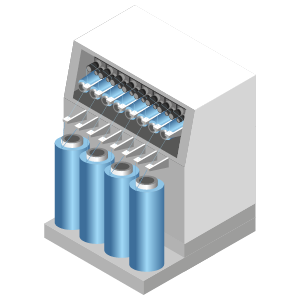
  • Textile industry
    With brushless DC motors, direct drives, stepper motors and blower motors, our product portfolio offers various drive technologies for the entire process chain from yarn production to fabric processing. In the textile industry, our drives are used in pumps for synthetic fibers, spinning machines, bobbin handling and also in warp knitting machines. In particular, the high dynamics and reliability of our drives are of enormous importance for the textile industry.
    Motors for Textile industry
  • Plastics industry
    In the plastics industry, Dunkermotoren motors are used, among other things, in the area of granulate dosing. The intelligent motors are part of a complex process chain and are particularly suitable for constant and precise continuous operation, as they are low-maintenance, reliable and efficient.
    Motors for Plastics industry

Featured Products:

Press releases

08/20/2026
From dialysis to dosing: one modular motion platform, scaled to your pump's precision, noise and duty-cycle targets.
Configurable BLDC motor solutions help pump manufacturers improve precision, energy efficiency, connectivity and long-term reliability across medical, industrial, hydraulic, and process applications As pump manufacturers face increasing demands for energy efficiency, precise flow control, reduced noise, longer service life, compact design, and digital connectivity, Dunkermotoren is helping OEMs address these challenges with configurable brushless DC (BLDC) motor solutions engineered specifically for pump applications. Rather than treating the motor as a standalone component, Dunkermotoren takes a systemlevel approach. The company works with pump manufacturers and system developers to combine motor technology, drive electronics, feedback systems, communication interfaces, and application engineering into a complete drive concept tailored to the pump, its load profile, and the operating environment. By replacing multiple independently sourced components with a single modular motion platform, OEMs can significantly reduce engineering effort, simplify BOM management, and accelerate system integration while maintaining flexibility for different pump requirements. “Pump performance today depends on far more than motor selection alone," said Michael Burgert, Product Manager at Dunkermotoren. "Manufacturers increasingly benefit from modular motion solutions that combine motor technology, intelligence, connectivity, and application engineering in a single platform. This approach simplifies integration while helping customers achieve the precision, efficiency, and reliability their applications demand.” Meeting the Diverse Demands of Modern Pump Applications The demands placed on a pump drive vary significantly by application. Flow rate, pressure, duty cycle, installation space, ambient conditions, and communication requirements all influence the optimum drive configuration. Medical Technology: Precision and Quiet Operation In dialysis equipment and other medical systems, precision and consistency are essential. Accurately controlled pumps manage blood flow, dialysate, and other fluids throughout lengthy treatment sessions. Stable motor control helps maintain reproducible flow rates, while quiet operation and low vibration contribute to a more comfortable environment for patients and healthcare professionals. Compact motor dimensions and integrated electronics also help equipment designers optimize limited installation space within increasingly sophisticated medical devices. Hydraulic Systems: Performance Under Changing Loads Hydraulic pumps used in rail vehicles, mobile equipment, and industrial machinery often operate under changing loads and within tight installation spaces. They may also be exposed to vibration, shock, temperature fluctuations, and frequent start-stop cycles. Closed-loop BLDC motor control enables hydraulic pressure to be generated as required and adjusted according to actual system demand, helping designers balance dynamic performance with energy consumption. Cooling and Process Circulation: Efficiency Through Variable Speed Control For cooling circuits, HVAC systems, and process-fluid circulation, efficiency is a primary consideration. Instead of operating continuously at full output, variable-speed BLDC motors allow flow rates and pressure levels to respond to real-time cooling requirements or process conditions. This can reduce unnecessary energy use while maintaining reliable thermal management and process stability. Dosing and Metering Pumps: Repeatable Accuracy Water treatment, chemical processing, laboratory equipment, and automated filling lines depend on the precise delivery of defined fluid volumes. Responsive, repeatable motor control supports consistent dosing performance even when operating conditions change. Why BLDC Technology Continues to Gain Ground Across these applications, accurate and responsive control is a common requirement. Electronically commutated BLDC motors enable precise speed and torque regulation, which can translate into more stable flow rates, improved pressure control, and greater dosing accuracy. Eliminating mechanical brushes minimizes wear, reduces maintenance requirements, supports quiet operation, and contributes to extended service life. Efficiency is another important advantage. Reduced energy losses can lower operating costs and minimize heat generation, particularly in pumps that run continuously or for long periods. These characteristics make BLDC technology increasingly attractive for applications ranging from compact medical devices and connected dosing systems to industrial process equipment and electro-hydraulic power units. Key benefits for pump manufacturers include: • Precise speed and torque control for stable flow, pressure, and dosing • Variable-speed operation that matches pump output to actual demand • Low-noise, low-vibration performance for sensitive environments • Reduced wear and maintenance through brushless operation • High energy efficiency with lower heat generation • Long service life and reliable operation over demanding duty cycles Modular Motion Platforms Enable Scalable Automation Pump performance increasingly depends on how effectively the complete drive system is integrated. Dunkermotoren’s smart motor platforms provide scalable levels of control, connectivity, and diagnostics, allowing the drive solution to be matched to the complexity of the application. dGo: Simplified Control For applications requiring basic speed control and straightforward functionality, dGo provides an economical solution with speed regulation, direction control, and error detection. Application-specific functions, including customized speed profiles or jam detection, can also be incorporated. dMove: Enhanced Connectivity Where greater connectivity is required, dMove adds CANopen communication and provides access to operating data such as motor speed, current, and temperature. This supports monitoring and control in networked pump systems and can also serve applications requiring positioning or torque control. dPro: Advanced Industrial Networking and Diagnostics For highly connected automation environments, dPro supports CANopen, PROFINET, EtherCAT, and EtherNet/IP. The platform provides access to motor and application data for advanced diagnostics, monitoring, predictive-maintenance strategies, and integration into IoT environments. Applications requiring high pumping accuracy, detailed operating data, or Safe Torque Off functionality can benefit from these capabilities, while vector-controlled commutation helps reduce energy consumption. Engineering Support Beyond the Motor No two pump applications are identical. Dunkermotoren therefore supports manufacturers with application-specific drive configuration and engineering assistance that addresses both mechanical and electrical integration. Engineering teams evaluate torque, speed profiles, thermal behavior, duty cycles, installation constraints, and environmental conditions to align motor behavior with the requirements of the complete pump system. Depending on the application, customization can include: • Application-specific shaft designs and mounting arrangements • Special motor dimensions and interfaces matched to the pump housing • Encoder systems, integrated electronics, and communication interfaces • Customized control functions and speed profiles • Gearbox solutions where required by the torque and speed profile   This collaborative approach can simplify integration, shorten development effort, and support reliable long-term operation from initial concept through series production. Complete Drive Solutions for Smarter Pumps As pumps become smarter, more efficient, and increasingly connected, drive technology plays a critical role in overall system performance. Built around a modular motion solutions philosophy, Dunkermotoren combines BLDC motor technology, intelligent control platforms, communication interfaces, feedback systems and application engineering into a scalable drive architecture. The result is a single platform that adapts to a wide range of pump requirements while simplifying integration and accelerating time to market. Further information: BLDC Motors for Pumps Downloads: Press release (PDF) Graphic (JPG)
08/18/2026
Dunkermotoren at SIDO Lyon 2026 | Modular Motion Solutions for AGVs & Automation
Dunkermotoren showcases high-end motor solutions for digital production lines and battery-driven robots at SIDO.

SIDO Lyon has established itself as a leading event for innovators shaping the future of industry. On September 16 and 17, 2026, more than 300 exhibitors from all over the world will showcase cutting-edge technologies that help companies digitalize operations, optimize production and enhance performance.

As the leader in modular motion solutions from drive technology to IoT Solutions, Dunkermotoren, a brand of AMETEK, will be on stage as well. As a special highlight at their booth O324, the company showcases a Norcan mobile robot. “The Agile” Sherpa-B AGV series, powered by Dunkermotoren motor solutions, demonstrates how simple it is to optimize and automate logistics processes. It stands out with a load capacity up to 200 kg, compatibility with a wide range of bin sizes, and long battery life – all without requiring any modifications in the factory´s infrastructure.

In addition, Dunkermotoren puts a strong focus on the modularity of its solutions. Since shorter development cycles and a growing complexity are challenging for machine builders, a modular system is extremely advantageous in machine development. Proven components such as motors, gearboxes, electronics, and software can be combined flexibly, enabling customized solutions in a very time- and cost-effective way.

Get inspired and visit Dunkermotoren at booth O324.
08/12/2026
Dunkermotoren dGo Motors Simplify Decentralized BLDC Drive Integration
Dunkermotoren, the global leader in modular motions solutions, expanded its Smart motor line with the new dGo motor family, brushless DC motors with integrated commutation electronics that let machine builders add reliable, cost-efficient speed-controlled axes without a servo drive or fieldbus connection. dGo joins dCore, dMove and dPro as the entry level of drive intelligence within one fully compatible platform, so OEMs can scale from simple speed control to full positioning without changing motor families. Modern automation systems often include auxiliary motion axes that require reliable speed control but do not need advanced positioning, synchronized multi-axis motion or an Industrial Ethernet connection. Using a fully programmable servo drive for every conveyor roller, pump or secondary machine axis can increase hardware cost, wiring effort and commissioning time without adding practical value to the application. Dunkermotoren dGo motors bridge this gap by combining a brushless DC motor with integrated commutation electronics and application-oriented control functions. Depending on the version, motor speed can be adjusted via supply voltage, analog input or PWM signal, while digital inputs support functions such as start, stop and direction selection. The result is a compact and easy-to-integrate drive solution for repeatable motion tasks. Within the Dunkermotoren portfolio, dGo represents the entry level of drive intelligence for speed-controlled applications, while dMove and dPro provide advanced control, communication and positioning capabilities for more demanding motion tasks. Integrated electronics for simplified machine design BLDC motors require electronic commutation to generate the rotating magnetic field that drives the rotor. In conventional systems, this function is performed by an external controller connected to the motor through separate power and feedback wiring. dGo integrates these electronics directly into the motor. For machine builders, this means fewer components, reduced wiring effort and simplified installation. The integrated architecture is particularly suitable for standardized OEM applications where compactness, reliability and efficient assembly are more important than freely programmable motion functionality. dGo is designed for applications requiring dependable speed control rather than complex positioning tasks. Its application-oriented functionality enables decentralized motion without the additional hardware and engineering effort associated with a fully programmable servo drive. Three Product Families for Different Requirements The dGo portfolio comprises the BGA 22 dGo, BG 42 dGo and BG 45 dGo series, allowing machine builders to select the most suitable solution according to available installation space, power requirements and operating conditions. Key Performance Highlights Across the dGo portfolio, machine builders can select from a range of performance and integration options tailored to their application requirements: • BGA 22 dGo with up to 24 W continuous output power and up to 236 W peak output power • BG 42 dGo with up to 96 W continuous output power and up to 214 W peak output power • Integrated commutation electronics for decentralized drive architectures • Analog, PWM and digital I/O control options, depending on the motor version • Compatibility with suitable gearboxes and brakes • Protection ratings up to IP65 for the BG 45 dGo BGA 22 dGo The BGA 22 dGo is a compact, slotless three-phase BLDC motor with integrated commutation electronics. Its coreless design eliminates cogging torque and supports exceptionally smooth and quiet operation. Depending on the configuration, the motor can be operated through a simple two-wire connection or via multiple control inputs for start and stop functionality, direction selection, and analog or PWM speed control. The motor delivers continuous output power of up to approximately 24 W and peak output power of up to 236 W, depending on the winding and operating conditions. Its compact design makes it particularly suitable for applications with limited installation space and moderate continuous power requirements. BG 42 dGo The BG 42 dGo is designed for applications requiring higher continuous output within a compact 42 mm motor diameter. Featuring an eight-pole neodymium magnet system and integrated four-quadrant speed control, it provides continuous output power of up to 96 W and peak output power of up to 214 W. Analog speed control and direction selection support straightforward integration into machine architectures, while the Dunkermotoren Modular Motion System allows the motor to be combined with suitable gearboxes, brakes and other drive components. BG 45 dGo The BG 45 dGo extends the concept to a more robust motor platform with protection ratings up to IP65 and support for various optional attachments. Sharing the same application-oriented operating philosophy as the BG 42 dGo, it combines straightforward speed control with enhanced mechanical integration options, making it suitable for more demanding industrial environments. Four-Quadrant Operation for Reversible Applications The BG 42 dGo and BG 45 dGo feature integrated four-quadrant speed control, enabling controlled acceleration, deceleration and reversing in both rotational directions. This functionality is particularly beneficial in conveyor systems, reversible transport sections and other applications that require frequent direction changes or controlled braking. As with any regenerative drive system, machine designers must consider braking energy, load inertia and power supply behavior when sizing the complete system. Straightforward Control via Standard I/O A key advantage of the dGo concept is its focus on essential functionality. Supported variants accept analog or PWM speed references, while digital inputs provide basic control commands such as start, stop and direction selection. Because these signals can be supplied directly by standard PLC I/O, switches or simple control logic, there is no need for fieldbus configuration, network addressing or motion-profile programming. This simplifies machine architectures that incorporate multiple independent, speed-controlled axes. Integrating the commutation electronics into the motor also reduces wiring complexity and supports compact installations. EMC performance must nevertheless be evaluated at the system level, taking cabling, grounding and power supply design into account. Factory Configuration and Application-Specific Functionality For OEMs, the factory customization capabilities of the BG 42 dGo and BG 45 dGo can reduce commissioning effort and help standardize machine platforms across larger production volumes. Fixed speeds, acceleration and deceleration ramps, digital output functions, current limits and numerous other operating parameters can be configured at the factory to match specific application requirements. For larger projects, customized operating routines can also be stored directly in the motor electronics. These routines can support functions such as jam detection, autonomous motion sequences, speed-dependent current limitation and other application-specific processes. By embedding this functionality at the drive level, machine builders can limit the need for external control hardware while maintaining a compact and cost-efficient drive architecture. Ideal for Conveyors, Pumps and Auxiliary Axes Typical dGo applications include conveyor systems, roller drives, pumps, fans, sorting equipment and decentralized auxiliary axes. In these applications, the primary requirement is reliable and repeatable speed control rather than advanced motion functionality. By placing the necessary drive electronics directly at the motor, dGo reduces the need for separate controller hardware and supports efficient, modular machine designs. Brushless motor technology also provides low-maintenance operation, making dGo particularly attractive for equipment with long operating times and recurring motion tasks. Functionality Tailored to the Application Selecting the appropriate drive solution begins with evaluating the application’s load profile, torque requirements, speed range, supply voltage, ambient conditions and available installation space. The selected motor and gearbox combination must then be verified against the complete duty cycle. For applications requiring reliable speed control without advanced positioning or communication functions, dGo offers a compact and cost-efficient alternative to separate controller architectures. By integrating the electronics required for the task directly into the motor, Dunkermotoren enables machine builders to reduce complexity while benefiting from proven brushless DC technology and a flexible Modular Motion Platform. “Many machine builders do not need the complexity of a fully programmable servo drive for every motion axis,” said Michael Burger, Productmanager at Dunkermotoren. “The dGo family focuses on the functionality these applications actually require, combining reliable BLDC performance with integrated electronics, straightforward control interfaces and application-specific configuration options.” By integrating the electronics required for speed-controlled operation directly into the motor, Dunkermotoren dGo motors help OEMs reduce component count, simplify installation and limit overall system complexity. The result is a compact and reliable drive solution for conveyors, pumps, fans and other decentralized motion applications where straightforward speed control is the primary requirement. Further information: https://www.dunkermotoren.com/en/knowledge/dunkermotoren-dgo-cost-optimized-integrated-control
07/22/2026
EtherCAT Drive Solutions for Real-Time Automation
Driving Efficiency, Flexibility and Real-Time Performance: Dunkermotoren Enables Advanced EtherCAT Drive Architectures Scalable EtherCAT solutions from 10 to 5000 watts help OEMs reduce complexity, improve synchronization and optimize machine design Modern automation systems require fast communication, precise synchronization and compact machine architectures. Especially in multi-axis applications, drive systems must exchange data reliably in real time while remaining easy to integrate, commission and scale. Dunkermotoren addresses these requirements with a broad EtherCAT-capable drive portfolio, offering both integrated smart servo motors and modular motor-controller combinations for flexible machine concepts. With EtherCAT interfaces available across its dPro drive platform and compatible external controller solutions, Dunkermotoren enables deterministic motion control for demanding industrial applications. The portfolio covers scalable power requirements from 10 to 5000 watts and supports machine builders in implementing compact, high-performance drive systems tailored to their individual automation architecture. Flexible Architectures: Integrated or Modular by Design Depending on the machine concept, Dunkermotoren offers two main EtherCAT architecture paths. Integrated dPro drives combine motor, encoder, drive electronics and EtherCAT interface in one compact housing. This all-in-one concept is particularly suitable for decentralized automation systems where cabinet space is limited, wiring effort must be reduced and intelligence is required directly at the drive level.  For applications requiring a split architecture, Dunkermotoren’s dCore motors can be combined with external EtherCAT controllers such as the BGE 5510 dPro EC. This setup is especially useful when control electronics need to be separated from the motor due to high vibration, demanding thermal conditions or machine layouts based on centralized cabinet concepts. This dual approach provides maximum design freedom, enabling OEMs to align drive architecture precisely with mechanical constraints, environmental conditions and system layout. Real-Time Communication as a Productivity Driver EtherCAT plays a critical role wherever synchronized motion and deterministic behavior are required. Its ability to deliver short cycle times and minimal communication jitter enables highly precise coordination between multiple axes. Dunkermotoren drives support established motion control profiles such as CANopen over EtherCAT and CiA 402, making integration into existing control environments straightforward and reducing commissioning effort. In practice, this level of synchronization directly influences machine performance. In packaging and labeling applications, it ensures accurate positioning, cutting and product handling. In sorting or shuttle systems, it enables higher throughput through precise timing. In material handling, it stabilizes processes even under dynamic start-stop conditions. For machine builders, real-time communication therefore goes beyond connectivity, it becomes a key lever for improving output, consistency and overall process reliability. Reducing System Complexity Through EtherCAT Integration In addition to performance benefits, EtherCAT helps simplify machine design. By using standard Ethernet cabling in a daisy-chain topology, complex wiring structures can be significantly reduced. The elimination of separate communication layers and feedback systems not only lowers hardware requirements but also minimizes potential sources of error. This simplification becomes even more visible in integrated drive concepts. With drive electronics embedded directly into the motor, the need for additional servo drives in the control cabinet is reduced or eliminated. The result is more compact machine layouts, shorter installation times and lower overall system complexity. Access to Data Without Interrupting Operation Modern automation increasingly relies on transparency and data availability. Dunkermotoren enables access to drive parameters, status information and diagnostics via Ethernet over EtherCAT without interrupting real-time communication. This allows engineers to analyze performance, adjust parameters and identify potential issues directly through the existing network infrastructure. During commissioning, this capability accelerates setup processes. In operation, it simplifies troubleshooting and helps reduce downtime. The ability to maintain full system visibility without compromising performance adds an important layer of efficiency to complex automation systems. Integrated Safety Supporting Compact Designs Safety requirements continue to grow in importance, particularly in highly automated environments. Dunkermotoren addresses this with Safe Torque Off (STO), implemented as a standard hardware feature across its EtherCAT solutions. By integrating safety directly into the drive, machine builders can reduce the need for external components and design more compact safety concepts. This not only simplifies compliance with safety standards but also supports more efficient system layouts without adding unnecessary complexity. Proven Across Demanding Automation Applications The advantages of EtherCAT-based drive architectures become especially clear in realworld applications. In autonomous mobile robots and automated guided vehicles, compact integrated drives enable precise motion control while optimizing space and energy usage. In warehouse automation, fast communication supports responsive and high-throughput sorting and shuttle systems. In packaging and labeling machinery, synchronized multi-axis motion ensures stable, repeatable processes, from film handling to positioning and cutting. Across all these applications, the combination of real-time performance, flexible integration and reduced complexity contributes directly to more efficient and reliable machine operation. “Machine builders today need flexibility without sacrificing performance,” says Andreas Winterhalter, Head of Products at Dunkermotoren. “With our EtherCAT portfolio, customers can standardize on a single communication technology while choosing the drive architecture that best fits their machine concept, whether integrated, modular or a combination of both.” Dunkermotoren’s EtherCAT drive portfolio demonstrates how modern drive technology can simplify automation while increasing performance. By combining scalable power, flexible architecture and deterministic real-time communication, OEMs can reduce complexity, improve synchronization and design more efficient machines, tailored precisely to their application requirements. Downloads: Pressrelease EtherCAT (PDF) Graphic (JPG) Further Information: Product Finder: Find the right EtherCAT-capable drive solution based on power range, interface and application requirements. Go to Product Finder Modular System Overview: Explore compatible motors, gearboxes, encoders, brakes and controllers within Dunkermotoren's modular drive system. Explore our Modular System