

 Contact Us
BLDC Motors with Integrated Controller
Simplify Your Design with Integrated Power
Brushless DC motors (BLDC or EC motors) are renowned for their reliability, efficiency, and power. Now, we're taking things a step further with our innovative line of BLDC motors featuring integrated drive electronics. These all-in-one solutions offer a powerful combination of benefits:
- Streamlined Design: Eliminate the need for separate drives and controllers. Our integrated design saves space and simplifies your machine build.
- Plug-and-Play Convenience: Get up and running faster with easy installation and configuration. No need for complex wiring or programming.
- Optimized Performance: The motor and drive are perfectly matched for peak efficiency and smooth operation.
Product Datasheets


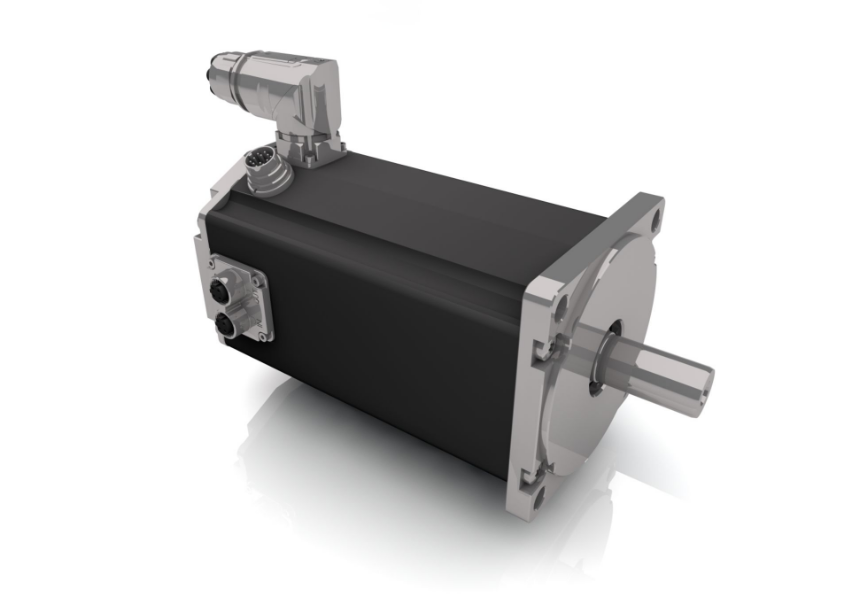
Specifications
| Applied Voltage | 6 / 12 / 24 / 48 / 60 | VDC |
|---|---|---|
| Nominal power | 10-1400 | W |
| Nominal torque | 0,017-2,78 | Nm |
| Nominal speed | 2950-8940 | rpm |
Brushless DC motors (Smart motor), series BG, with integrated control electronics
- Speed-positioning- and current control operation
- Can be combined with high resolution encoders, brakes and gearboxes
- Control through bus or I/O's or stand-alone operation
- High IP protection against water or contamination
- Inherent overload protection
-
Function Overview
Brushless DC motors - 4 stages of functionalities Feedback dCore dGo dMove dPro Sensorless (✔) - - - Hall sensors ✔ ✔ ✔ ✔ High resolution encoder (✔) - - ✔ Controller dCore dGo dMove dPro Block commutation - ✔ ✔ (✔) Sinusodial commutation /
vector control- - - ✔ Speed (open loop) - ✔ (✔) (✔) Speed/ torque (closed loop) - - ✔ ✔ Position - - ✔ ✔ Complex motion profiles - - - ✔ Features dCore dGo dMove dPro Programmable / Stand-alone-operation/ Motion Apps - - - ✔ Robust isolation of bus - - - (✔) Ballast circuit parameterizable - - (✔) ✔ Safe Torque Off - - - (✔) Brake output - - (✔) ✔ Quick start commands - - ✔ ✔ Interface dCore dGo dMove dPro Digital and analogue I/Os - (✔) ✔ ✔ Field Bus (CANopen) - - (✔) (✔) Industrial Ethernet (Profinet, EtherCAT,...) - - - (✔) SSI - - - (✔) Replaces previous versions Hall KI SI, CI (low res.) SI, CI, PI, MI, EC (high res.) ✔ = Standard, (✔) = Optional / on request
Downloads Series


Operating Manuals
-
Product Datasheets
-
FAQ´s
-
Flyer


-
What is a brushless DC motor? What is the difference between BLDC, EC motor and synchronous motor?Brushless DC motors (short: BLDC for brushless DC, also called EC motors) are designed like a three-phase synchronous machine with excitation by permanent magnets.
The three-phase winding is driven by a suitable circuit in such a way that it generates a rotating magnetic field which pulls the permanently excited rotor along with it.
EC motors of Dunkermotoren are commutated and controlled by a mostly integrated electronic to which a DC direct voltage is applied. BLDC motors are also similar to classic DC motors in their overload behaviour. -
What is the difference between dCore / dGo / dMove and dPro?dCore: Brushless DC motors BG series with integrated Hall sensors for rotor position detection
dGo: Brushless DC motors BG series with integrated commutation electronics
dMove: Brushless DC motors BG series with integrated control electronics
dPro: Brushless DC motors BG series with integrated control electronics and integrated high-resolution encoder Further information can be found in a comprehensive overview in catalogues and on the website. -
What are the advantages and disadvantages of brushed and brushless motors?Brushed DC motors from Dunkermotoren are robust, cost-efficient and easy to commission. Due to the wear of the carbon brushes, their service life is limited. Depending on the design and application, the service life is typically between 1000 and 8000 hours.
Brushless DC motors, also known as EC motors, are electronically commutated and have a significantly longer service life and lower interference radiation due to not having carbon brushes. The service life is usually limited by the ball bearings and is several 10000 hours, depending on the application. In addition, the motors have an even higher power density and dynamics, easy to implement protective functions and very good controllability.
Further information on this issue can be found in the corresponding white paper on the Dunkermotoren website (section "Knowledge")


Customization and Support
- Tailored Stepper Motor Solutions: Our expert technical team specializes in customizing BLDC motors to meet your unique requirements. We offer modifications to the shaft, cable, connector, and IP protection, ensuring that each motor fits perfectly into your application.
- Fitting Gearboxes for All Sizes: We provide high-quality gearboxes designed to fit various BLDC motor sizes, ensuring optimal compatibility and performance. For security reasons, we offer perfectly matched power-off brakes to keep your application in place when power is off.
- Integrated Electronics: Electronics: Enhance your BLDC motors with our integrated electronic solutions, providing seamless control and improved performance. Our integrated controllers are available with various interfaces like EtherNet/IP, EtherCAT, CANopen, and PROFINET.
Where Our BLDC Motors Are Used
Our Brushless DC (BLDC) motors with integrated controllers and gearmotors are versatile and reliable, making them ideal for a wide range of applications across various industries. Here are some detailed examples of where and how our BLDC motors are utilized:
Automated Guided Vehicles (AGVs)
BLDC motors are crucial in AGVs for their precise control and reliability. They ensure smooth and efficient movement of these vehicles in warehouses and manufacturing facilities, enhancing productivity and safety. AGVs equipped with BLDC motors can autonomously transport goods, navigate obstacles, and communicate with other systems to optimize material handling processes, reducing labor costs and improving operational efficiency.
Conveyor Systems
BLDC motors enhance conveyor systems by offering precise speed control and high efficiency. They are ideal for transporting materials smoothly and reliably, reducing maintenance and improving overall system performance. For instance, in a warehouse setting, BLDC motors power the conveyors that move goods from storage areas to shipping docks. Their ability to operate at variable speeds allows for the efficient handling of different types of products, optimizing workflow and reducing energy consumption.
Packaging Lines
BLDC motors are essential in packaging lines for their precise control and high efficiency. They enable smooth and accurate product handling, ensuring high-speed operations and reducing bottlenecks. For example, BLDC motors drive the conveyor belts that transport products through various stages of packaging, from filling to sealing. Their ability to maintain consistent speed and torque ensures that each package is handled with precision, reducing errors and increasing throughput.
Outdoor Cleaning Robots
BLDC motors are used in outdoor cleaning robots for their high-power density and efficiency. These motors enable precise control and quick movements, making them ideal for tasks such as lawn mowing, leaf blowing, and snow removal. For example, a robotic lawn mower equipped with BLDC motors can navigate complex terrains, adjust its cutting height, and operate for extended periods on a single battery charge, providing reliable and efficient lawn maintenance.
Checkweighers
In checkweigher systems, BLDC motors provide reliable and precise control for weighing products on conveyor belts. These motors are used to drive the belts that move products across the weighing sensors. The high torque and efficiency of BLDC motors ensure accurate measurements and consistent performance, which is crucial for maintaining product quality and compliance with weight regulations.
Robotic Lawn Equipment
BLDC motors are widely used in robotic lawn equipment such as mowers and leaf blowers. Their high torque and efficiency make them ideal for demanding outdoor applications, providing reliable performance and extended battery life. For instance, a robotic mower with BLDC motors can efficiently cut grass, avoid obstacles, and return to its charging station autonomously, ensuring a well-maintained lawn with minimal human intervention.
Learn more: See our industry overview
Industries
How to Select the Right Brushless DC Motor for Your Application
Choosing the right Brushless DC (BLDC) motor for your application involves considering several key factors to ensure optimal performance and efficiency. Here’s a guide to help you make the best choice:
1. Determine the Load Requirements
- Torque: Identify the torque requirements of your application. Consider both the continuous torque and peak torque. Our BLDC motors offer high torque suitable for various applications.
- Speed: Determine the speed at which the motor needs to operate. BLDC motors are ideal for applications requiring precise control at various speeds.
- Combination: Define your operating points and review the motor performance curves. Ensure your operating points are within the motor's capabilities.
2. Select the Appropriate Size
- Motor Sizes: Choose the appropriate motor size based on your space constraints and torque requirements. Larger motors generally provide higher torque but may have different speed characteristics.
- Compact Design: Ensure the motor fits within the physical dimensions of your application. Our BLDC motors are designed to offer high torque in a compact form factor.
3. Consider the Motor Specifications
- Voltage Rating: Ensure the motor's operational voltage range matches your power supply to avoid performance issues
- Current Rating: This indicates how much current the motor can handle before overheating. It's crucial to match this with your system's needs to prevent overloading
- Electronic Speed Controllers (ESC) and Feedback Sensors: These components are vital for precise control and monitoring of the motor's performance
4. Evaluate the Environmental Conditions
- Temperature: Ensure the motor can operate within the temperature range of your application. Consider any additional cooling requirements.
- Protection: Assess the need for IP protection against dust and moisture. Our BLDC motors can be customized with various IP ratings to suit different environments.
5. Integration with Gearboxes and Encoders
- Gearboxes: Determine if your application requires additional torque or speed reduction. Our BLDC motors can be paired with high-quality gearboxes for enhanced performance.
- Encoders: For applications requiring precise feedback, consider integrating high-resolution encoders.
6. Control and Drive Requirements
- Controllers: When selecting the right controller for a BLDC motor, it's important to ensure compatibility with industrial communication protocols such as EtherNet/IP, EtherCAT, CANopen, and PROFINET to facilitate seamless integration and efficient real-time control in your automation system.
- Power Supply: Ensure the motor and controller are compatible with your power supply specifications.
7. Customization Options
- Tailored Solutions: Consider any specific customization needs, such as shaft modifications, cable lengths, connectors, or additional features. Our technical team can provide tailored solutions to meet your exact requirements.
8. Consult with Experts
- Free Consultation: Take advantage of our free consultation service to discuss your specific needs with our experts. They can help you select the right BLDC motor and configure it for your application.
Benefits of BLDC Motors with Integrated Controller | Gearmotors
1. Precise Positioning and Control
BLDC motors excel in providing accurate positioning and control, making them ideal for applications where precision is crucial. They offer smooth and responsive control, allowing for exact rotation and movement. For example, in packaging lines, BLDC motors ensure precise product handling and positioning, reducing errors and increasing efficiency.
2. High Torque and Efficiency
Unlike traditional motors, BLDC motors provide high torque across a wide range of speeds. This ensures optimal performance without the need for additional gearboxes, enhancing efficiency and reducing complexity. In conveyor systems, BLDC motors maintain consistent speed and torque, ensuring smooth material transport.
3. Reliability and Durability
BLDC motors are highly reliable due to their brushless design, which minimizes mechanical wear and tear. This results in a longer operational lifespan and reduced maintenance requirements. In outdoor cleaning robots, BLDC motors withstand harsh environments and provide reliable performance.
4. Cost-Effectiveness
BLDC motors are generally more affordable in the long run due to their efficiency and reduced maintenance needs. Their integrated controllers further streamline the design process, reducing overall system costs. In checkweigher systems, BLDC motors offer precise control and high efficiency, ensuring accurate measurements and consistent performance.
5. Flexibility in Control
BLDC motors offer excellent speed and torque control and can be easily integrated with various control systems. Their versatility makes them suitable for a wide range of applications, from robotic lawn equipment to automated guided vehicles (AGVs).
BLDC Motors vs. Other Motor Types
When selecting a motor for your application, it's important to understand the differences between BLDC motors and other common motor types, such as Stepper motors and DC motors. Here's a detailed comparison to help you make an informed decision:BLDC Motors vs. Brushed Motors
- Efficiency: BLDC motors are more efficient due to the absence of brushes, which reduces friction and energy loss. Brushed motors, while simpler and cost-effective, have lower efficiency because of the energy lost in brush friction.
- Maintenance: BLDC motors require less maintenance as they don't have brushes that wear out. Brushed motors need regular maintenance to replace brushes
- Lifespan: BLDC motors generally have a longer lifespan due to fewer moving parts. Brushed motors have a shorter lifespan because of brush wear.
- Applications: BLDC motors are used in high-efficiency applications like electric vehicles and robotics. Brushed motors are often found in low-cost applications such as household appliances and power tools.
BLDC Motors vs. Stepper Motors
- Precision: Stepper motors excel in applications requiring precise positioning and repeatability, such as CNC machines and 3D printers. BLDC motors offer precise speed control but are less suited for applications requiring exact positioning.
- Torque: BLDC motors provide higher torque at higher speeds, making them suitable for dynamic applications. Stepper motors deliver high torque at low speeds but can lose torque at higher speeds.
- Control: Stepper motors operate in open-loop systems, which can be simpler but less efficient. BLDC motors typically use closed-loop systems for better efficiency and control.
- Applications: Stepper motors are ideal for applications needing precise control, like printers and medical devices. BLDC motors are used in applications requiring high efficiency and power, such as drones and AGV´s
BLDC Motors vs. AC Motors
- Efficiency: BLDC motors are generally more efficient than AC motors, especially in variable speed applications. AC motors can be less efficient due to higher energy losses in certain conditions
- Control: BLDC motors offer better speed and torque control, making them suitable for applications requiring precise control. AC motors are simpler and often used in applications where precise control is less critical.
- Maintenance: Both BLDC and AC motors have low maintenance requirements, but BLDC motors may have an edge due to fewer moving parts
- Applications: AC motors are widely used in industrial applications like pumps, fans, and compressors. BLDC motors are preferred in applications requiring high efficiency and compact size, such as electric vehicles and consumer electronics.
FAQ´s on Brushless Motors with integrated controller
-
What are the advantages of an integrated controller?Motors with integrated controllers offer several key advantages. First, they save space by combining the motor and controller into a single unit, reducing the overall size and footprint of the system. This integration also simplifies wiring, as fewer cables are needed, which makes installation easier and reduces potential points of failure.
Additionally, integrated systems can optimize performance and reduce energy consumption, leading to improved efficiency. With fewer components and connections, the system is less prone to failures and electrical noise, enhancing reliability. Integrated controllers often come with user-friendly interfaces and software, making configuration and control straightforward.
Another benefit is that electromagnetic interference (EMI) is easier to manage. The controller is firmly connected to the motor, ensuring a perfect fit. Moreover, no additional space is needed for the controller in the control cabinet, further saving space and simplifying the setup. -
How are they controlled?Brushless motors from us are easily commissioned, parameterized, and controlled via the Drive Assistant 5 tool from Dunkermotoren. This commissioning and configuration tool is designed for dPro and dMove motors, as well as external controllers in IO mode, with interfaces such as EtherCAT, PROFINET, EtherNet/IP or CANopen. It supports devices with MotionCode and allows for monitoring the CAN bus.
Once motors are parameterized, they can operate stand-alone. Up to 14 different speeds, positions, ramps, and currents can be assigned to digital inputs, providing flexibility in control. Direct parameter access is possible, and the status of all relevant motor parameters can be displayed. The tool offers a wide range of tuning options and is compatible with all dMove and dPro motors and external controllers.
Drive Assistant 5 also includes an extensive oscilloscope function and supports commissioning and service for EtherCAT and PROFINET motors (dPro EC and dPro PN) directly via Ethernet. Additional features include a Python scripting function, a CAN monitor, and automatic device search and detection for CANopen, EtherCAT, and PROFINET devices.
This comprehensive tool ensures that our brushless motors are easy to set up, configure, and control, making them highly efficient and user-friendly. -
Where are motor with integrated controller used?Motors with integrated controllers from Dunkermotoren are utilized in a variety of applications due to their compact size, efficiency, high dynamic and ease of integration:
- Industrial Automation: Employed in conveyor systems, robotic arms, and CNC machines for precise control and automation.
- Warehouse Automation: Integrated into automated storage and retrieval systems (AS/RS) and conveyor systems.
- Material Handling: Used in packaging machinery and labeling equipment.
- Food & Beverage: Incorporated into processing equipment and automated dispensing systems.
- Machinery: Essential for CNC machines and industrial robots.
- Agriculture: Implemented in automated feeding systems and irrigation equipment.
- Building Automation: Key components in smart blinds, automated doors, and HVAC systems.