Driving Automation Forward

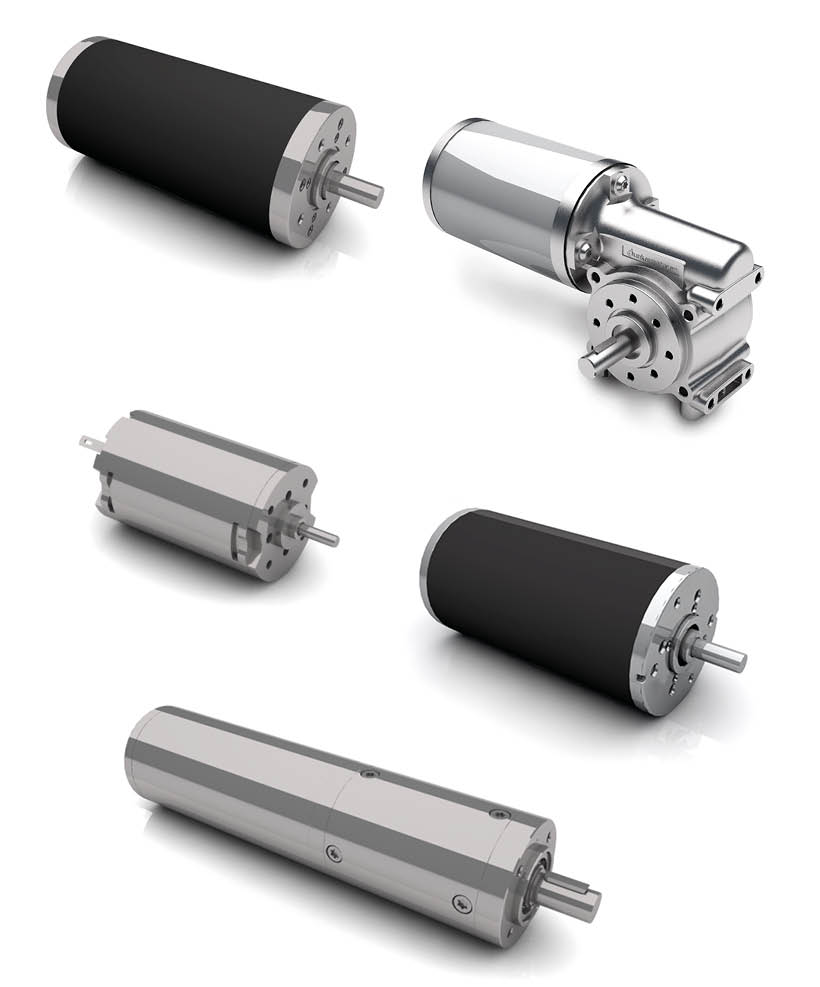
We supply high-performance DC motors that power key intralogistics systems - AGVs, Sorter Systems, Cube Storage, ASRS, and Luggage Handling. Our motors deliver precision, efficiency, and reliability, enabling smooth and scalable automation worldwide.
Sorting Systems
Sorting Systems

Sorting Systems

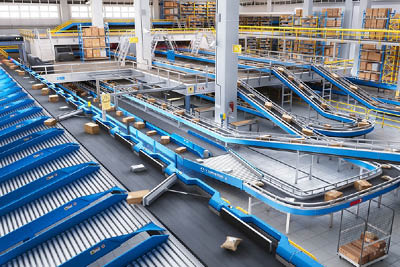
DC motors deliver fast and accurate motion for sorters and sorting systems. Built for continuous operation, they support high throughput and precise item handling in logistics processes.

More Details
Robotic Cube Storage System

Robotic Cube Storage

Robotic Cube Storage

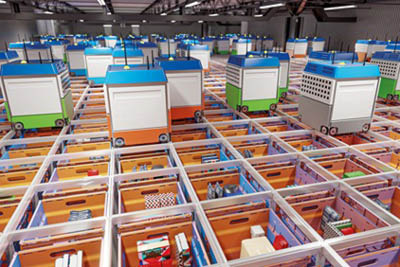
Designed for precision and speed, DC motors power robotic cube storage systems, enabling high-density warehousing and optimized material flow in automated environments.

More Details
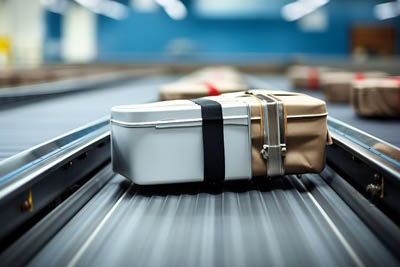
Luggage on a Conveyor at an Airport

Luggage and Baggage Handling

Luggage and Baggage Handling

DC motors ensure reliable and continuous operation in baggage handling systems. Their compact design and high efficiency enable smooth transport under heavy loads and demanding conditions.

More Details

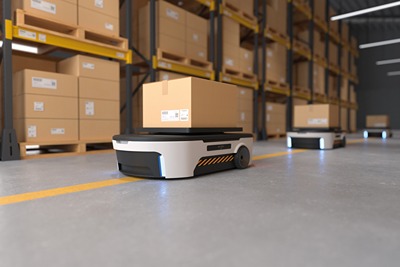
Automated Guided Vehicle for logistics in warehouses

AGV´s, AMR´s and AGC´s

AGV´s, AMR´s and AGC´s

DC motors provide the mobility and power for AGVs, AGCs, and AMRs, enabling autonomous transport solutions with smooth, efficient, and reliable operation in intralogistics

More Details
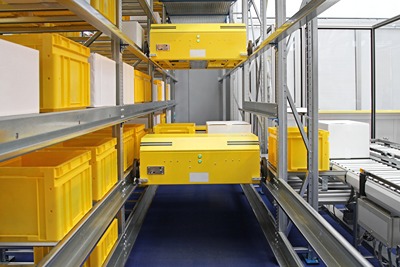
Shuttle in Automated Storage and Retrieval System

Automated Storage and Retrieval System

Automated Storage and Retrieval System

DC motors drive automated storage and retrieval systems with precision and reliability, ensuring efficient material handling and optimized warehouse performance.

More Details

  • More Applications where Dunkermotoren DC Motors are used

    DC Motor Applications — Material Handling


    Application Description Motor Type Typical Power Range Control Method
    Conveyor Systems DC motors drive belts or rollers to move goods along production or packaging lines. They offer smooth speed control for efficient material flow and can handle variable loads without jerks. Brushed/Brushless DC 0.5 - 5 kW PWM
    Automated Guided Vehicles (AGVs) DC motors power the wheels and steering of AGVs, enabling precise navigation and speed control for transporting goods across warehouses or factories. Brushless DC 1 - 10 kW PWM
    Hoists and Winches DC motors lift and lower heavy loads in cranes or hoists. Their torque control ensures safe, smooth lifting and prevents sudden drops during material handling. Brushed DC 2 - 15 kW PWM
    Robotic Arms DC motors actuate joints in robotic arms for pick-and-place tasks. They provide accurate positioning and variable speed for handling delicate or heavy items. Brushless DC 0.1 - 2 kW Servo
    Transfer Carts DC motors propel motorized carts that move materials between workstations. They allow controlled acceleration and braking for safe transport. Brushed DC 1 - 8 kW PWM
    Elevators and Lifts Small industrial lifts use DC motors for vertical movement of goods. Their precise control ensures smooth operation and accurate stopping at desired levels. Brushed DC 2 - 12 kW PWM
    Palletizers and Depalletizers DC motors position pallets and products during stacking or unstacking. They enable synchronized movement for efficient automation. Brushless DC 0.5 - 3 kW Servo
    Sorting Systems DC motors actuate diverters and belts in sorting lines, ensuring quick and accurate routing of parcels or products without damaging them. Brushed DC 0.5 - 5 kW PWM
    Automated Storage and Retrieval Systems (AS/RS) DC motors power shuttles and lifts that move bins or pallets within storage racks. They provide precise speed control for accurate positioning and smooth acceleration during retrieval operations. Brushless DC 1 - 6 kW PWM
    Packaging Machines In carton sealing, wrapping, and labeling systems, DC motors drive rollers and belts for consistent material feed. Their variable speed capability ensures synchronization with other machine components for efficient packaging. Brushed DC 0.2 - 2 kW PWM
    Bucket Elevators Used for vertical transport of bulk materials like grains or powders, DC motors drive the pulley system. Their torque control ensures smooth lifting and prevents sudden jerks that could damage the material or equipment. Brushed DC 2 - 10 kW PWM
    Telescopic Conveyors DC motors extend and retract conveyor sections for loading/unloading trucks. They allow controlled movement and adjustable speed, making them ideal for handling varying load sizes and operational flexibility. Brushed DC 1 - 5 kW PWM
    Rotary Tables DC motors rotate tables used for sorting or assembly in material handling lines. Their precise speed and position control enable accurate orientation of products for downstream processes like packaging or inspection. Brushless DC 0.5 - 3 kW Servo
    Stretch Wrappers These machines wrap pallets with film for stability during transport. DC motors rotate the turntable and control film carriage movement, ensuring uniform wrapping tension and adjustable speed for different load sizes. Brushed DC 0.5 - 4 kW PWM
    Inclined Belt Conveyors DC motors drive belts that move goods up or down slopes. Their torque adaptability prevents slippage and ensures smooth operation under varying load conditions, making them essential for multi-level material handling. Brushed DC 1 - 6 kW PWM
    Diverter Gates In sorting systems, DC motors actuate gates that redirect products to different conveyor paths. Their quick response and precise positioning enable high-speed sorting without damaging goods. Brushless DC 0.2 - 1 kW Servo
    Mobile Loading Ramps DC motors adjust the height and angle of ramps used for loading trucks or containers. They provide controlled lifting and lowering, ensuring safe and efficient alignment with vehicle beds. Brushed DC 1 - 8 kW PWM
    Pallet Shuttles DC motors power shuttles that move pallets within racking systems. Their compact design and precise control allow efficient storage and retrieval in tight spaces, reducing manual handling and increasing throughput. Brushless DC 0.5 - 3 kW PWM

Featured Products
Downloads

Press Releases

02/05/2026
The Future of Warehouse Efficiency
How Automated Storage and Retrieval Systems (ASRS) sustainably optimize processes

The intralogistics industry is currently undergoing a profound transformation. Increasing demands for speed, flexibility, and cost efficiency are driving the development of modern automated storage and retrieval systems (ASRS). Technologies such as artificial intelligence (AI), IIoT, and advanced sensor technology form the foundation for new performance standards in warehouse and production environments.


Modern providers of robotic and warehouse solutions emphasize system availability, reliability, and minimal manual intervention. Many systems today achieve over 99% uptime, enabling nearly uninterrupted material flow. A key factor is contactless charging technology, which efficiently manages the energy supply of autonomous vehicles and reduces downtime. Combined with AI‑based algorithms, vehicles can react to environmental changes in real time, optimize their routes, and make autonomous decisions.

Increasing Requirements for Drive Technology

As automation advances, expectations for motor technology continue to rise. Long service life, high availability, integrated safety, and intelligent data utilization have become essential. Dunkermotoren addresses these needs with its new motor controller platform. All integrated and external control electronics are fitted as standard with a certified STO safety interface to ensure safe operation in challenging conditions.

New Safety Functions for Maximum Machine and Process Safety

Higher safety – lower integration effort – proven functionality


With the introduction of dSafe, Dunkermotoren is offering comprehensive Safe Motion functions for the first time. These include:

  • • SS1 – Safe Stop 1
  • • SLS – Safely Limited Speed
  • • SLP – Safe Limited Position
  • • SBC – Safe Brake Control
  • • FSoE interface (Fail Safe over EtherCAT)

These features simplify safety concepts, reduce the need for external hardware, and help implement standards-compliant applications more quickly.

Illustration of an automated pallet‑shuttle storage system with multiple pallets positioned on roller tracks. A blue annotation symbol highlights the drive position. On the right side of the image, a black electric motor with an attached large blue drive wheel is shown, representing the propulsion unit used in the system.
Flexibly Configurable Motor Controller Platform 


Maximum adaptability – simple integration – reduced system costs

The platform allows users to configure the control electronics precisely according to application requirements. Bus and Ethernet interfaces such as:

  • • CANopen
  • • PROFINET (PROFIdrive AK 1 & 4)
  • • EtherCAT (Distributed Clocks)
  • • EtherNet/IP
are integrated directly into the motor. This often eliminates the need for an external controller, saving installation space and significantly simplifying commissioning via the Drive Assistant Tool. 
Additional features such as an electronic nameplate, operating hours counter, clock synchronization, and freely programmable logic increase transparency and flexibility. Improved voltage resistance also protects the electronics from high battery charging voltages - an especially important advantage in mobile robotics systems.

IIoT‑Integration with nexofox

Data-driven efficiency – predictive maintenance – lower downtime costs

In combination with the digital brand nexofox, high-frequency process data can be collected directly within the customer application and transferred to the cloud via a gateway-independent of the higher-level PLC.

The analysis enables:
  • • Real-time insights into motor status
  • • Visual dashboards
  • • Derivation of maintenance needs
  • • For the first time: precise statements about motor lifetime

This forms the basis for predictive maintenance, reduces failure risks, and improves planning reliability. 

Technical illustration of an autonomous mobile robot (AMR) showing a transparent wireframe chassis with integrated electric drive motors and blue drive wheels. The vehicle footprint is labeled as 600 mm by 1200 mm. Dunkermotoren and AMETEK branding is displayed, highlighting compact drive solutions for robotics and intralogistics applications.
Expansion of the Motor Portfolio

Higher load capacity – compact designs – robust mechanics

In parallel with electronic developments, the motor portfolio has been expanded with new hub gearboxes. The NG 250, NG 500, and NG 1000 w/o series are specifically designed for drive wheels in mobile intralogistics systems. Their robust design supports loads up to 1,000 kg without additional bearing support, saving space and simplifying mechanical integration.

Application Areas in Modern Logistics Environments

Dunkermotoren’s intelligent motors are used in numerous systems, including shuttles and high-speed storage systems, AGVs and AMRs, cube robotics solutions, and sorting and picking systems.

Real-world examples highlight the versatility of the portfolio:
BG 95 dPro is used in robots for online supermarket operations, while BG 75 supports parcel sorting processes in logistics centers.

Conclusion

The combination of high-performance motor technology, integrated safety functions, IIoT capabilities, and robust mechanical design makes Dunkermotoren’s solutions an essential building block for the smart warehouse of the future. Companies benefit from higher system availability, reduced operating costs, increased safety, and data-based process optimization. These solutions make a significant contribution to improving efficiency and competitiveness in modern intralogistics.

Downloads:

Professional Article (PDF)
04/17/2024
The journey of our luggage: from baggage check-in to our holiday destination and back
When we travel by plane these days, we attach great importance to punctuality and a comfortable journey. It is now taken for granted that we drop our luggage off at the counter and pick it up again on a carousel at our destination. Due to the high volume of passengers, baggage, and goods, logistics in the background of airport operations is key to ensuring that the baggage arrives together with its passengers. Every item back to its owner - baggage logistics at airports: When we arrive at the airport, we expect a simple check-in of our luggage at the counter. We are happy that we no longer must take care about transporting our bulky suitcase. There is no question in our minds that it will be automatically transported and loaded onto the right airplane.  After arriving at our destination, we want to collect our luggage undamaged at the baggage reclaim - with as little wait time as possible. What is required in the background for this process is beyond our knowledge.  This is where intralogistics comes into its own. What typically has been associated with large industrial buildings and warehouses has long since become an integral part of airports and some large railway stations. Once the luggage has been checked in at the counter, it is the airline's responsibility to transport all suitcases to the right gate at the right time and load them onto the right aircraft. Upon arrival at the destination, the luggage must be transported to the appropriate baggage claim area where its owner can collect it. The volume of transport at international airports has risen steadily over the years and current forecasts predict that the volume of travelers will continue to increase. Over 550 aircraft take off from Germany's largest airport in Frankfurt every day. With approximately 150,000 passengers per day, around 88,000 pieces of baggage must be handled. That's over 22 million suitcases a year, which are received, loaded, transported, and then returned to their owners. Early baggage check-in - but where to put it? Around 20,500 suitcases can be transported per hour at modern airports. The routes to the corresponding gate are traveled at a transport speed of up to 18 km/h. In theory, a suitcase can be transported to any desired point on the airport premises in just 10 minutes. However, the security checks required for baggage and passengers are becoming increasingly extensive and time-consuming due to the high security precautions. To avoid the resulting stress at check-in, many passengers hand in their luggage at the counter two to three hours before departure, or even check it in the evening before.  Where to put baggage checked in so early? The only way to earn money with an aircraft is in the air, which is why airlines keep the ground time of their aircraft as short as possible. This, in turn, means that the time window for loading an aircraft is tight. Baggage that is checked in early therefore cannot be loaded onto the aircraft immediately and must be stored temporarily. The challenge in storing and transporting baggage lies in its sorting and, on the other hand, in transport logistics, which ensures that the baggage reaches the designated gate on time. There are various concepts for this, which are generally used in combination. One common approach, for example, is to distribute each piece of baggage in its own transport tray, which is transported through the airport via a rail system. With the help of a tilting movement, the luggage then reaches a chute, from where they are taken to a collection point for further distribution. By integrating such transport trays into a storage system, it is possible to store the baggage temporarily. Such systems are mainly used where luggage has to be individually checked and transported onwards. As an alternative to the transport trough, a conventional conveyor belt can also be used to transport a large amount of luggage from A to B at high speed. This approach is used when many items of luggage must be transported long distances within an airport. Here too, tilt-tray sorters are used to supply different areas and transfer points. An intermediate solution is a circular track with anchored trays with a tilting function. In this system, a single piece of luggage is placed on each tray. The suitcases are distributed to various collection points via the round or oval "circular track" using the tilting function. For even faster loading and unloading of the aircraft, luggage can be loaded into precisely fitting containers in the belly of the aircraft rather than individually. The time-consuming loading process takes place on the ground. As soon as the aircraft docks at the terminal, the entire container can be loaded in a time and space-optimized manner. Unloading is also quicker with the help of the containers. Using a tilting and sorting mechanism, the baggage items are taken out of the container onto a conveyor belt and can then be collected and transported to baggage claim. However, not all airports support this advanced technology yet. The drive unit – a key component for transport and sorting Whether trough, circular track, or conveyor belt technology - without the right drive, there is no way forward for the luggage. In modern baggage transport systems, both the transport and tilting movements are initiated by electric drives. The top priority when using drive solutions in airport logistics is their reliability. With throughputs of several tens of thousands of items of baggage per day, a smooth process must be guaranteed. The drives used are therefore always networked via a fieldbus system. This means that the status of the drives can be requested and controlled by a higher-level control system. Remote maintenance and condition monitoring functions allow the drives to be analyzed and replaced in advance before an impending failure. What is known in industry under the buzzwords IIoT, Industry 4.0, and predictive maintenance has been used in airports for decades. Without these features, reliable operation could not be guaranteed and the immense volumes of baggage could not be handled. There is also an increased requirement for surface protection of the gear motors, as they are often exposed to strongly fluctuating temperatures and other influences. Many airports are built in coastal areas. Salty sea air can have a particularly aggressive effect on the systems used outdoors and the motors installed in them. Depending on the area of application, ambient temperatures of -20°C to +40°C can also occur. The electric gearmotors used here require good surface protection combined with a robust design. An integrated control system and various fieldbus systems also ensure simple and fast communication with a higher-level control system. Dunkermotoren, a brand of AMETEK, can combine all these requirements in its smart series of brushless DC motors. Countless Dunkermotoren solutions are already ensuring the safe and reliable transport of baggage around the world to relieve the burden on airport operators, airlines, and passengers and make travelling more comfortable. Get a non-binding advice to find the suitable motor concept for your baggage transport system. Downloads: The journey of our luggage: from baggage check-in to our holiday destination and back (PDF)
04/09/2024
Keeping an eye on the market - expert interview on automation at airports
Measured by the number of arriving tourists, global travel has now almost completely recovered from its slump during the Covid-19 pandemic (World Tourism Organisation (UNWTO), 2023). Passenger numbers in air travel have also been rising steadily for many years, except for the two coronavirus years 2020 and 2021. According to current forecasts, this trend is set to continue in the coming years (Statista, 2023). Increasing passenger numbers coupled with a continuing shortage of skilled labor, regulatory requirements for security-relevant processes, and high expectations of passengers themselves present airport operators with new challenges. Crowds of people at check-in and constant physical contact at various checkpoints must be avoided. With smart drive solutions, Dunkermotoren can contribute to the further expansion of automation at airports and thus further improve the safety and comfort of passengers. In this interview, Dunkermotoren, an AMETEK brand, talks to Matthias Tidelski and Tobias Johnston about the automation trend at airports. As key account managers at Dunkermotoren, they both oversee a wide range of projects in the field of airport-specific systems and tell us what developments they see for the future. Mr. Tidelski, according to studies, the automation of airports is an increasingly important aspect for their operators. What do you think are the biggest drivers for increasing investment in this area? Tidelski: Airports have to cope with an increasing number of passengers. At the same time, aircraft idle times need to be reduced. With fewer qualified staff available to handle passengers and their baggage, the only option is to optimize automated processes - in all areas. This begins with check-in and baggage drop-off and extends to the transport and distribution of baggage within the airport and the loading of the aircraft. Mr. Johnston, your customers are involved in the development of automatic access control systems and security gates that process thousands of passengers every day. Do developments in passenger numbers have an impact on the technical requirements of such systems and the components installed in them? Johnston: With rising passenger numbers, increasing automation is expected above all to improve the flow of people. Systems must therefore run quickly and smoothly. This means that ever more dynamic drive solutions are required to further reduce the time a person spends at an access gate. On the other hand, the increased performance requirements of the drive systems must not be at the expense of service life, which is why particularly durable gearboxes are in demand. Apart from increasing passenger volumes, where do you currently see the biggest challenges for manufacturers of automatic access control systems? Johnston: The demands on the functionality of such gates are constantly increasing. The complexity of the integrated functions has long exceeded the design of solid mechanics. The focus is increasingly on the integration of systems such as facial recognition and networking with the building infrastructure. Such complex requirements, coupled with the objective of minimizing the time-to-market for new products, present manufacturers with major challenges, which are also reflected in the expectations placed on component suppliers. Please explain in more detail to what extent Dunkermotoren, as a drive manufacturer, is affected by the increasing demands on system manufacturers with its products. Johnston: So-called platform solutions are essential to fulfil the shortest possible "time-to-market". Here, software features are developed in-house and installed on an external drive controller, such as our BGE 5510 dPro. The motors of all gates can now be addressed via this central control unit. If updates or changes are required, these only need to be installed a single time. Even if old gates are later replaced with new solutions, the existing software can be reused thanks to the centralized control system. Time-consuming development and installation work is therefore no longer necessary and new products can be implemented more quickly. The issue of security also plays a major role in airport automation. No other market environment has more attention paid to the security aspect than at airports. It is imperative to ensure that unauthorized persons are denied access to sensitive areas.  For this reason, drives must be particularly robust. At the same time, however, it must be ensured that no personal injury can occur. This is achieved with the help of intelligent motor controls. Mr. Tidelski, alongside automation, digitalization is another megatrend of our time. How important is digitalization in airport automation? Tidelski: Without digitalization, it would simply not be possible for today's major airports to run smoothly. Ticket handling, seamless security checks, and passenger boarding are just a small part of all the processes that are necessary for smooth airport operations. The automated baggage handling from check-in to the aircraft and back to the owner via the baggage claim area is the less visible part. The barcode on the baggage label determines where the suitcase has to be transported and when. Conveyor belts several kilometers long then transport the luggage to storage systems or directly to the relevant aircraft. The actual work is then carried out by intelligent gear motors, which sort the luggage individually based on the labels and ensure that every single suitcase arrives at its destination at the right time. This sorting service is only possible if each individual drive communicates quickly and digitally with the control center and reacts accordingly when needed. In addition to all the trends, one additional thing cannot be neglected when developing new systems: Sustainability! What influence do you think energy efficiency and CO2 reduction will have on the development of airport-specific systems in the future? Tidelski: The CO2 footprint or CO2e equivalent is closely linked to the value chain. When constructing new airports, buildings, plants or systems, the aim is to achieve CO2-neutral production. Drive solutions from Dunkermotoren are already among the most efficient motors in their class. Dunkermotoren tries to minimize its CO2 emissions during production. For example, the use of solar technology and heat recovery in the production process improves the footprint of the products and enables our customers to optimize their own CO2 footprint and offer their customers energy-efficient solutions. Mr. Tidelski, Mr. Johnston, to conclude: What will be the focus of future developments to further optimize airport operations? Johnston: As Key Account Manager in the "Building" segment, I am of course delighted that it is not just access controls that are automated in airports. From the entrance door to the turnstile at the toilet, to the lift for barrier-free access to all areas and the shading provided by external blinds, all areas of building automation are already motorized with the help of Dunkermotoren motors. From my point of view, there is therefore no need for additional applications. For me, it will be interesting to see how the characteristics of automation develop in the coming years. After all, if we look at the actual needs of airport operators, it is not the hardware in the form of the gate itself that needs to be optimized. Rather, the aim is to ensure a high passenger throughput without security risks. It is therefore the service offerings behind the actual drive technology that can be used to avoid downtimes, for example, and represent the greater added value for airport operators. I am certain that we can offer manufacturers of access control systems, such as access gates, significant added value if we enable our motors to reliably predict impending downtimes. With the solutions from our digital brand nexofox centered around Predictive Maintenance, I believe we are ideally positioned for the future. Tidelski: I can only agree with that. In the area of baggage transport as well, trouble-free, and high system availability is the key to an efficient airport. If probable failures are recognized on the basis of drive data, spare parts can be kept in stock in good time and maintenance can be carried out during non-operational times, without disrupting airport operations. Thank you very much for the interview. About Matthias Tidelski Matthias Tidelski is Key Account Manager for the Industrial Automation market segment at Dunkermotoren. Working for the company for more than 20 years, he is familiar with the possibilities of the modular system and exploits the full potential of the Dunkermotoren drive solutions. Together with his customers, he has already implemented numerous complex sorting systems - for package sorting, warehouses and, of course, airport automation. About Tobias Johnston Tobias Johnston is Key Account Manager in the Building Automation market segment at Dunkermotoren. In addition to entrance doors such as swing doors or revolving doors, his customers increasingly develop so-called platform screen doors and access control systems in metro stations and airports to make public places like these more secure. The focus of our sales team on a specific market creates real market experts who knows the specific requirements of their market and customers and keep an eye on the latest guidelines. Downloads: Keeping an eye on the market - expert interview on automation at airports (PDF)
03/28/2023
Autonomous mobile robots from KNAPP - Warehouse flexibility thanks to strong drive solutions
The Open Shuttles, autonomous mobile robots (AMR), from KNAPP enable automation of internal transport without adjustments to the existing infrastructure. The Dunkermotoren drive solutions and gearboxes Framo Morat installed in the AMRs ensure the safe transport of even bulky and heavy loads.

How long are you willing to wait for your ordered goods?

According to a Statista publication from December 2021, most B2C customers from a total of twelve European countries included to the statistics expect their goods ordered online within three to five days. In the Netherlands, app. One third of the customers expect their goods to arrive after just one to two days.* But also in B2B commerce, speed, flexibility and transparency are getting increasingly important.

To meet these requirements, logistics processes within an organization must be designed to be as efficient as possible. But what is efficient today may already be outdated tomorrow. Workflows must be adapted to the fast pace of demands and requirements - and the associated logistics processes must keep pace.

A solution to these challenges is offered by the Austrian company KNAPP. Open Shuttles are autonomous mobile transport robots that take over internal transport tasks without adjustments to the existing infrastructure. Thanks to innovative fleet control software, tasks are efficiently distributed to the entire fleet of AMRs.

https://de.statista.com/statistik/daten/studie/652489/umfrage/annehmbare-lieferdauer-bei-online-bestellungen-in-europa/ - abgerufen am 22.11.2022

Travel drive

The AMRs of the Open Shuttle series are the flexible alternative to classic tote conveyor technology and transport totes, cartons and trays up to 800 x 600 mm and a maximum payload of 100 kg. Thanks to automatic lifting and width adjustment, the Open Shuttles can accommodate trays of different heights and widths. They are used to connect different storage areas with each other and also supply decentralized workstations.

In addition to plenty of intelligence provided by software and sensor technology, the travel drive is an important heart of the AMR. With its more than 70 years of experience in drive technology, Dunkermotoren, a brand of AMETEK, was able to provide the right solution.
The autonomous mobile robot is driven by two brushless DC motors of the BG 75 series. The attached controller ensures smooth acceleration and deceleration of the robot. A brake from the Dunkermotoren modular system, which is also integrated into the overall drive, ensures an immediate stop of the AMR in case of an imminent collision with other vehicles or people, which are reliably detected thanks to the integrated laser scanner.

The required power for the drive is provided by the hub gearbox from Framo Morat GmbH & Co. KG from Eisenbach, Germany. Together, the two companies - Dunkermotoren and Framo Morat - have already been able to realize many AGV/ AMR projects. Since 2021, they have been presenting a portfolio on the market specially designed for the strict safety and space requirements of AGV solutions. The complete system of motor and gearbox is maintenance-free over the entire service life. If the tread should unexpectedly become damaged or the requirements for the wheel change due to changed ground conditions, it can be replaced and serviced easily and directly on the vehicle.

With an acceleration torque of up to 42 Nm, the hub gearbox ensures the Open Shuttle to move even heavy loads without any problems. The emergency stop torque of 63 Nm ensures an immediate stop in case of an imminent collision. Thanks to the complete drive solution from Dunkermotoren and Framo Morath, the Open Shuttle is always moving safely and reliably. 

The special feature of the drive solution is the extremely compact design of the overall drive. The gearbox is integrated into the wheel hub and thus disappears into the drive without increasing its length.


Lift and steer drive

The autonomous mobile robot (AMR), Open Shuttle Fork is the model of choice when it comes to transporting entire pallets, racks or large special load carriers and has a payload of up to 1,300 kg. The integrated automatic lift enables the load to be picked up directly from the ground and allows the load to be placed at heights of up to 1.2 meters. In the Open Shuttle Fork, drive solutions from Dunkermotoren are used for both, the lifting and steering movements, giving the AMR omnidirectional mobility. Thanks to integrated CANopen electronics, the shuttle's higher-level control system can easily address and control the drives.

The lift of the up to 1,300 kg, is managed by the most powerful motor available in the Dunkermotoren product portfolio. A brushless DC motor of the BG 95 series with matching planetary gearbox handles even heavy loads without problems. The attached E 600 brake then holds the load in any desired position. If necessary, the brake is also used for an emergency stop at full lift. As soon as a certain safety level is reached, the engine is immediately switched off and the brake guarantees the stop.

To always keep the right course, two additional Dunkermotoren drives are installed in the Open Shuttle Fork as a steering unit. The intelligent BLDC motors of the BG 66 series with planetary gearboxes are particularly compact and, thus, perfectly suited for use in flat vehicles. Again, the integrated electronics provide the required intelligence. Thanks to the CANopen interface, the motor receives commands from the higher-level controller of the AMR and can implement even minimal course adjustments of several millimeters.

KNAPP's Open Shuttles can be integrated very easily into existing structures and during ongoing operation. To cover seasonal peaks, additional robots can be easily integrated into the fleet and removed again afterwards. Thanks to robust and maintenance-free drive solutions from Dunkermotoren and Framo Morat, the Open Shuttles are reliable, durable, and meet all requirements for small installation space and common interfaces.

Are you also planning to implement a driverless transport application? Our sales team will be happy to advise you!

Authors: Dunkermotoren: Stefanie Tröndle, Marketing Content Management & Stefan Tröndle, Produktmanager / Framo Morat GmbH & Co. KG: Felix Kneipp, Business Development / KNAPP: Anna-Carina Adam, Team Leader Marketing for Industry Solutions


Downloads
Mail Icon