

 Contact Us
Standardized CANopen Integration
CiA 301 defines a consistent communication model for parameter access, process data, network states and diagnostics across compatible CANopen devices.
CANopen servo drive solutions with CiA 301 and CiA 402 support for robust communication, flexible machine integration and precise motion control.
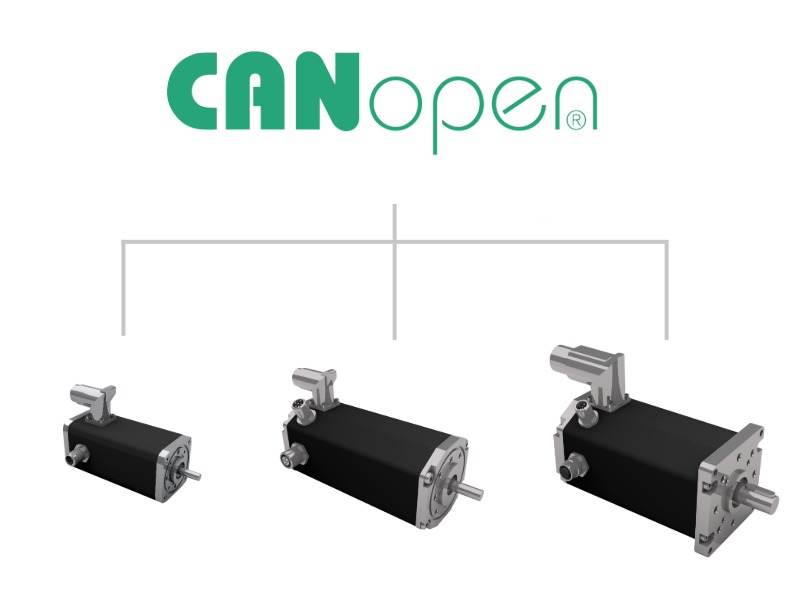
CANopen provides a standardized communication structure for controlling, configuring and monitoring devices over a CAN network. It defines how process data, parameters, operating states and diagnostic information are exchanged between the machine controller and the drive.
Dunkermotoren combines CANopen with compact BLDC servo motors and external dPro controllers. Both architectures support precise velocity, torque and position control while simplifying the integration of intelligent drives into embedded machines and decentralized automation systems.
CiA 301 defines a consistent communication model for parameter access, process data, network states and diagnostics across compatible CANopen devices.
Standardized Controlword, Statusword, drive states and operating modes simplify the integration of servo drives into machine control software.
Dunkermotoren QuickStart commands control complex drive functions with a single command, reducing programming effort and enabling faster implementation of the drive unit.
Choose compact motors with integrated control electronics or external controllers for separated, accessible and application-specific drive architectures.
Heartbeat monitoring, Emergency Messages and diagnostic objects help controllers detect missing devices, communication errors and drive faults.
More than 25 years of experience and over 600,000 delivered devices provide a proven foundation for reliable CANopen drive solutions.
Dunkermotoren smart servo motors combine the BLDC motor, power electronics, feedback processing, motion controller and CANopen communication in one compact drive unit.
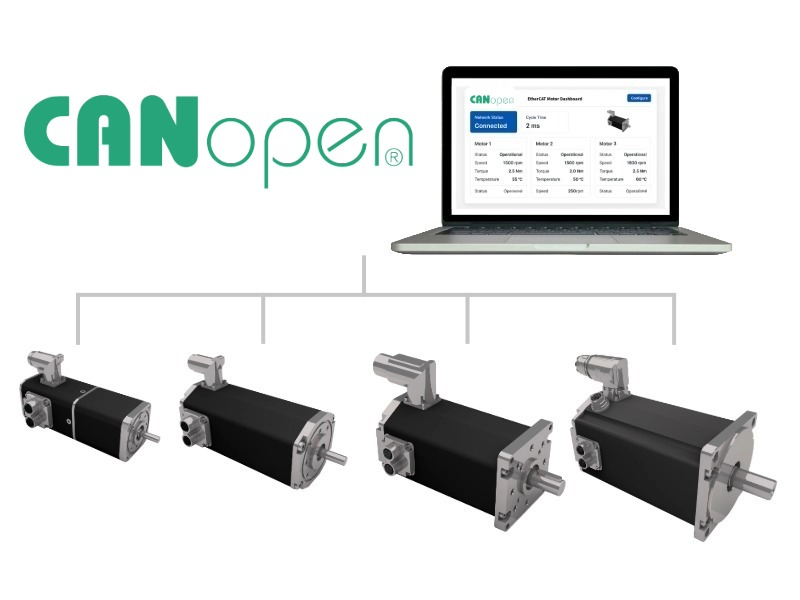
External dPro controllers separate the motor from the control electronics. This provides greater flexibility when the electronics must be installed in a protected location or when specific motor and feedback combinations are required.
The architecture also supports applications where centralized access to the controller simplifies commissioning, service and thermal management.
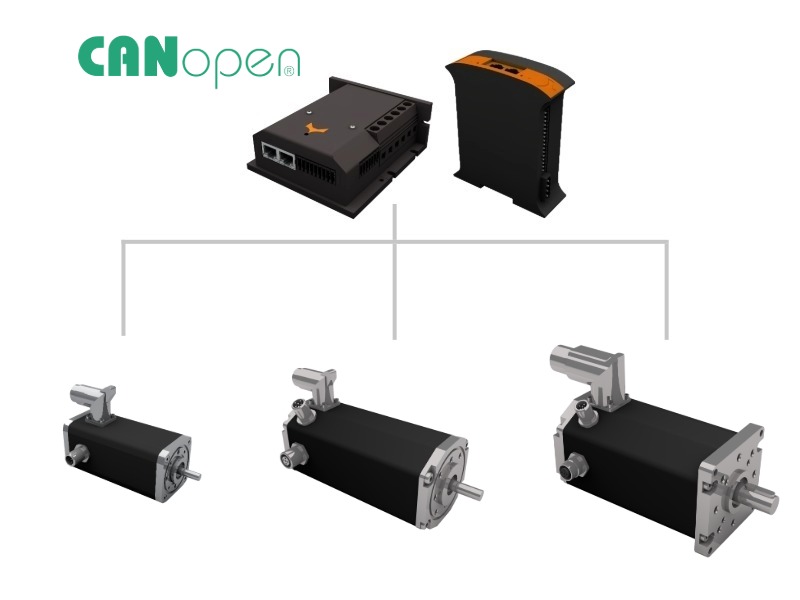
The right CANopen setup depends on where drive intelligence should be located, how the CAN network is structured and which motor, feedback and diagnostic functions are required. Use integrated dMove / dPro CO drives for compact decentralized motion control or combine compatible motor setups with the BGE 5510 or BGE 8060 dPro CO when the electronics should remain separated from the motor.
If the motor, control electronics and CANopen interface should be combined into one compact smart drive unit.
If a split architecture is required, where the motor and CANopen control electronics are installed separately.
Before selecting the drive family, define the mechanical, electrical and CANopen communication requirements of the axis.
Compare integrated and external CANopen setups in the Product Finder or contact our application engineers for a technical recommendation based on drive sizing, CiA 402 functions, network design and safety.
Build your CANopen architecture around compact smart BLDC motors with integrated drive electronics or use the BGE 5510/8060 dPro CO external controller for split drive systems. Dunkermotoren supports also a modular system for gearboxes, encoders and brakes.
Start with the motor size that matches your power range, installation space and machine architecture.
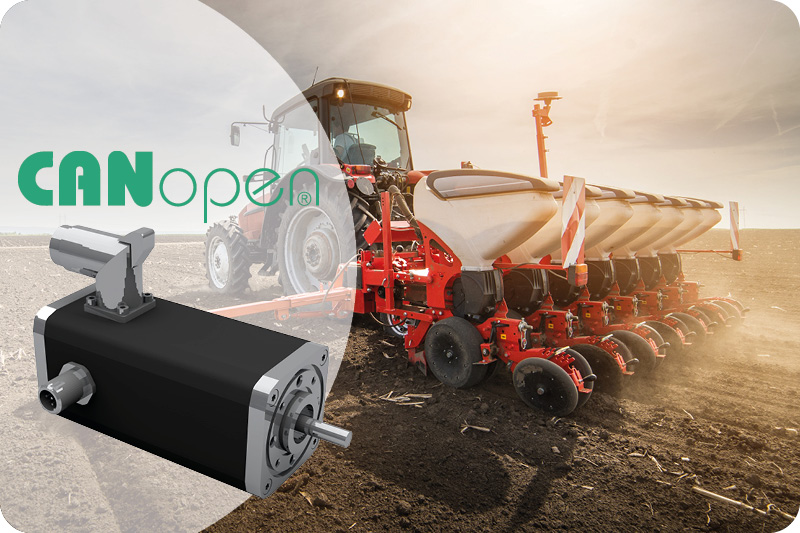
CANopen is widely used in agricultural and mobile machinery where robust communication, economic hardware and decentralized control are important.
Compact CANopen drives support controlled movement, structured diagnostics and precise positioning in medical and laboratory equipment.
CANopen supports embedded motion functions in vehicles and transport infrastructure where reliable networking and compact electronic nodes are required.
CANopen drive systems combine standardized CAN communication, structured parameter access, efficient process data and defined motion control functions. These terms explain how the main technologies work together within embedded and decentralized automation architectures.
CANopen is a standardized communication system based on CAN. It defines how controllers, drives and other devices exchange process data, parameters, operating states and diagnostic information within an embedded network.
CiA 301 defines the CANopen application layer and communication profile. It specifies the object dictionary, network management, process data, parameter access, synchronization and diagnostic communication.
CiA 402 is the standardized device profile for drives and motion control. It defines the drive state machine, Controlword, Statusword, operating modes, setpoints, actual values and relevant drive parameters.
PDOs exchange time-critical control and status data with low protocol overhead. SDOs provide confirmed access to individual object dictionary entries for configuration, commissioning and detailed diagnostics.
Network Management controls the communication state of every CANopen node. Heartbeat messages report the current device state and allow the controller to detect missing, inactive or disconnected participants.
Safe Torque Off prevents a compatible drive from generating motor torque. In selected Dunkermotoren dPro solutions, the drive logic can remain powered while torque generation is safely disabled.
Dunkermotoren provides the device description, object dictionary, parameter documentation and commissioning tools required to integrate the CANopen drive into an embedded automation system.
Install the CAN bus cable, shielding and terminating resistors according to the planned topology, cable length and environmental requirements.
Configure a unique Node ID for every CANopen device and select the same communication baud rate for all participants in the network.
Import the Electronic Data Sheet into the CANopen engineering tool to access the supported communication parameters and object dictionary entries.
Use SDO access to configure the operating mode, direction of rotation, motion limits, ramps, homing method and relevant drive parameters.
Assign the required Controlword, Statusword, setpoints and actual values to the available receive and transmit PDO communication.
Set the Heartbeat intervals and evaluate Emergency Messages so the controller can detect missing devices and active drive faults.
Switch the node to Operational, follow the CiA 402 state sequence and command the first controlled velocity or positioning movement.
Analyze actual values, optimize controller parameters and verify the drive, communication and fault behavior under real operating conditions.
Drive Assistant 5 supports CANopen device detection, Node ID and bit-rate recognition, parameterization, CAN monitoring, online tuning, diagnostics, firmware updates and oscilloscope functions. Compatible drives can also be commissioned without an existing CANopen master.
CAN provides reliable message transmission, but it does not define how a drive is configured, enabled, controlled or diagnosed. Without a standardized application layer, every device requires an individual communication concept.
Every manufacturer defines individual messages, parameter structures, device states and diagnostic procedures.
A common communication model creates a structured interface between the machine controller and compatible drive devices.
Dunkermotoren Quick Start combines extensive drive control with an exceptionally compact cyclic data structure. A single PDO with only 8 bytes of data can execute all motion commands and control many additional motor functions. This high functional density makes Quick Start particularly efficient for applications in which cyclic data volume and PLC programming effort need to remain low.
Select and manage the required drive operating mode within the compact command structure.
Start and stop movements and execute positioning or velocity-related tasks.
Adjust ramps and current limits according to the requirements of the application.
Start the homing procedure directly through the Quick Start command interface.
CANopen PDO mapping defines which objects are exchanged as process data between the controller and the drive. Relevant setpoints, actual values and status information can be selected according to the requirements of the machine.
Select the objects required by the controller instead of transferring unnecessary information. Receive and transmit PDOs can be structured around the specific motion function of the axis.
Choose the required entry from the drive object dictionary.
Map the object into the corresponding receive or transmit PDO.
Transfer the mapped data cyclically, synchronously or by event.
The available objects and mapping options depend on the selected device and firmware. Typical PDO content includes control, motion, I/O, operating-state and diagnostic data.
MotionCode allows application-specific logic to run directly on compatible Dunkermotoren motors and controllers. Local processing complements CANopen by moving suitable control, sequence and sensor tasks closer to the physical axis.
Execute repeatable motion and positioning routines directly inside the drive.
Respond locally to digital inputs and connected application signals.
Evaluate motor parameters and prepare relevant information for CANopen exchange.
Keep repetitive axis functions out of the central controller program.
Coordinates machine states, sends motion commands and evaluates process data and drive diagnostics.
Executes MotionCode, processes local signals and controls the velocity, torque or position of the physical axis.
Central CANopen coordination combined with decentralized drive intelligence.
Dunkermotoren combines motor, gearbox, encoder, brake, controller and communication interface within one coordinated modular system . This makes it possible to configure the complete drive according to the mechanical, electrical and CANopen communication requirements of the application.
Scalable power and voltage variants
Torque and speed adaptation
Feedback for controlled motion
Holding and stopping functions
Integrated or external electronics
CiA 301 and CiA 402 communication
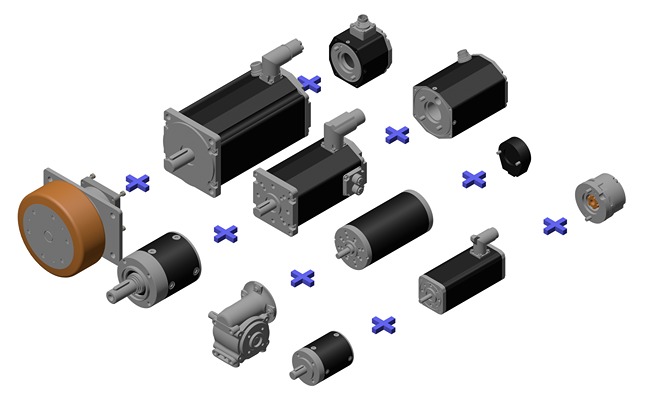 Modular CANopen drive solution